2027 BMW iX3 Neue Klasse Review: The Ultimate Driving Machine Enters a New Era

For decades, BMW adhered to a legendary automotive formula. The brand built its reputation by pairing lightweight chassis with spirited rear-wheel drive systems and high-revving engines that screamed past 7,000 RPM. However, as the automotive industry shifts toward complete electrification, BMW has decided that simple evolution is no longer sufficient. Enter the all-new 2027 BMW iX3, the groundbreaking debut vehicle of the brand’s ‘Neue Klasse’ generation. Featuring a pillar-to-pillar glass dashboard display, an massive next-generation battery, and a radical front-end design, the iX3 represents a full-scale revolution aimed at determining whether the Ultimate Driving Machine can thrive as the Ultimate Charging Machine.

Power, Performance, and the “Heart of Joy” Supercomputer

At launch, the BMW iX3 is offered exclusively in the 50 xDrive trim level. The iconic xDrive badging signifies a dual-motor all-wheel-drive powertrain generating an impressive 463 horsepower and 476 lb-ft of torque. This electric setup rockets the SUV from zero to 100 km/h in just 4.9 seconds, delivering instant power and athletic straight-line performance.

Behind the scenes, BMW has fundamentally rewritten vehicle computing architecture. Traditional automobiles rely on multiple isolated control units for the engine, braking, and steering. In contrast, the iX3 centralizes these operations into a single ultra-fast processor known as the “Heart of Joy”. Processing dynamic data ten times faster than previous BMW platforms, this central brain predicts road conditions and driver inputs in real time, granting the SUV remarkably agile handling.

Braking performance receives a similar high-tech upgrade with BMW’s Soft-Stop technology. The system seamlessly blends regenerative braking with traditional friction brakes, eliminating the abrupt jerk often felt in electric vehicles as they come to a complete halt. Because the calibration is so finely tuned, roughly 98 percent of everyday braking is handled entirely through energy recuperation. This dramatically reduces mechanical wear and tear, translating to significantly fewer brake maintenance visits over the life of the vehicle.

Suspension Tuning and Hands-Free Driving Intelligence

To ensure long-distance comfort on unpredictable road surfaces, BMW equipped the iX3 with a newly engineered Hydraulic Cushion Suspension. While utilizing a traditional mechanical arrangement rather than complex air springs, the dampers are specifically valved to absorb sharp pothole impacts. Even when equipped with optional 21-inch alloy wheels, the ride retains classic BMW tautness, striking a harmonious middle ground between the floating softness of a traditional luxury limousine and the overly stiff ride of competing electric SUVs.

On open highways, the iX3 offers semi-autonomous driving capabilities via an advanced hands-free driving assistant. On compatible divided highways, drivers can safely remove their hands from the steering wheel while maintaining active visual attention on the road ahead.

The system also introduces an intuitive eye-tracking lane change feature. When the iX3 approaches slower traffic and detects an open adjacent lane, it prompts the driver with a lane-change suggestion. To execute the maneuver, the driver simply checks the corresponding side mirror; upon registering the driver’s glance, the car automatically signals and completes the lane change smoothly.

Next-Generation 800V Architecture and Canadian Cold-Weather Range

Engineered to excel across vast distances and extreme winter climates, the iX3 debuts BMW’s sixth-generation eDrive battery technology built on a high-efficiency 800-volt electrical architecture. When connected to a 400-kW DC ultra-fast charger, the battery can replenish from 10 to 80 percent state-of-charge in just 21 minutes.

The heart of the system is a 109 kWh battery pack that achieves an NRCan-certified range rating of up to 698 kilometers on a single charge. This provides sufficient range for long highway road trips with ample margin remaining. Furthermore, the sixth-generation cylindrical battery cells deliver 20 percent higher energy density. This technology helps offset typical cold-weather efficiency drops during severe Canadian winters, giving drivers dependable range figures year-round.

Bold Exterior Styling and the “Neue Klasse” Aesthetic

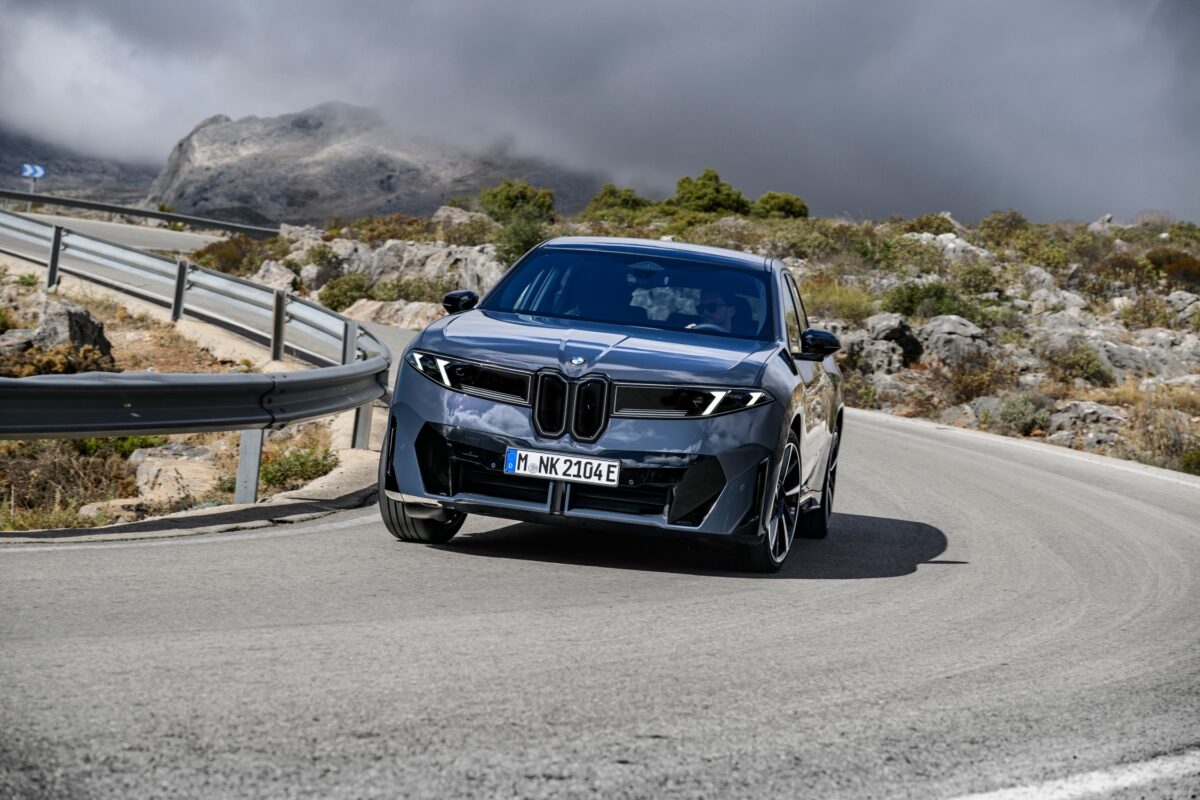
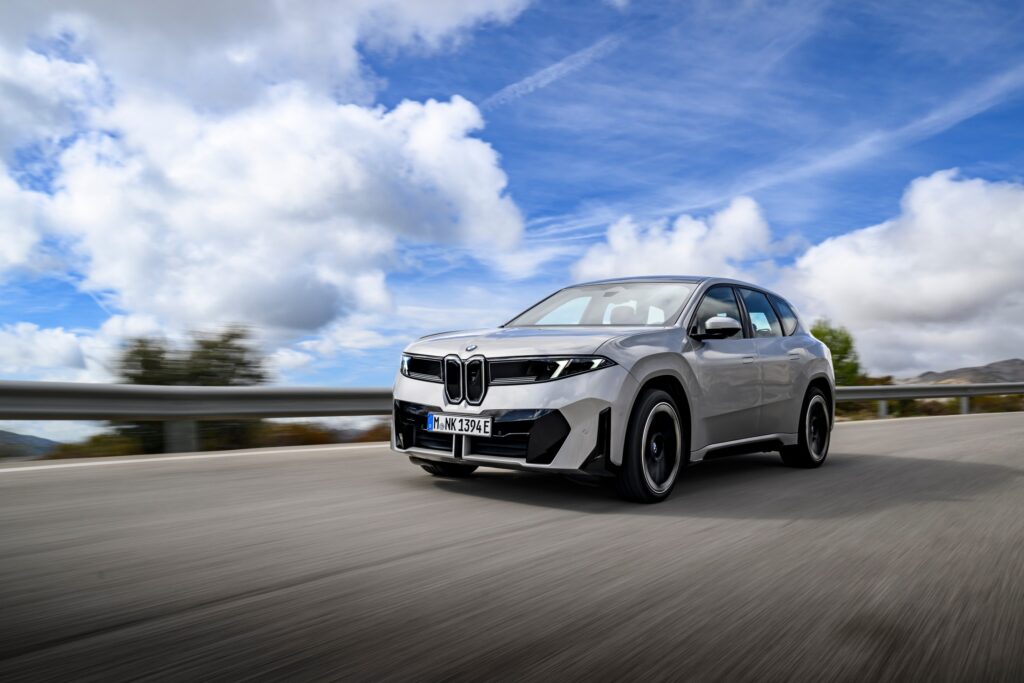
Extensively redesigned from the ground up, the exterior styling of the iX3 introduces a dramatic new design language for the brand. The iconic BMW kidney grille has been reinterpreted as a tall, vertical element flanked by sleek light clusters.

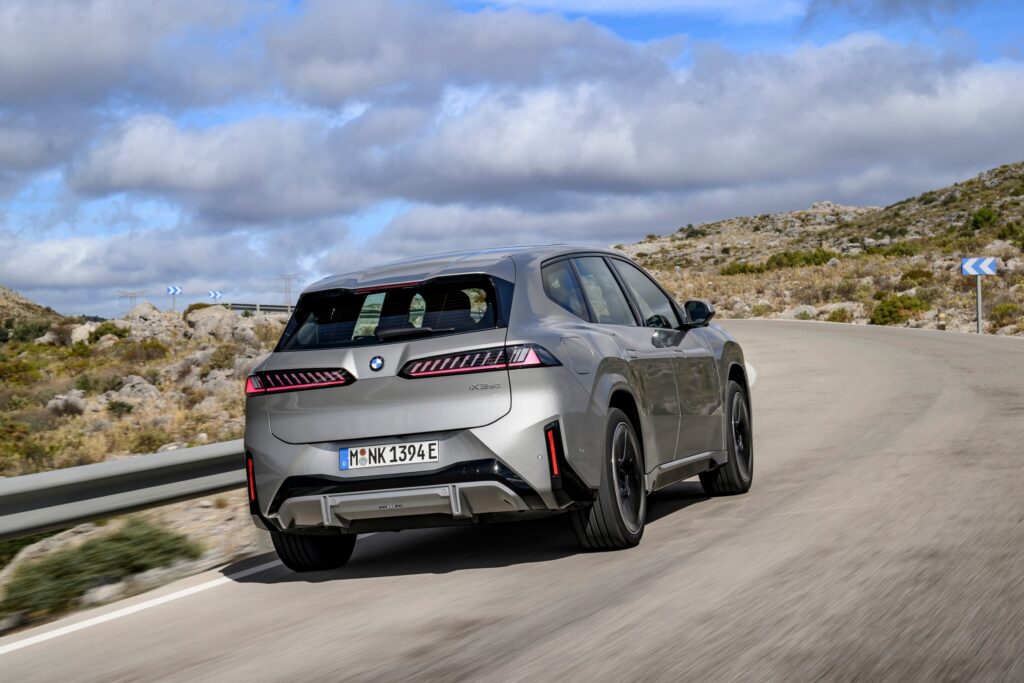
A high-gloss dark accent panel bridges the space between the vertical grille and outer headlights, creating a striking visual signature across the front fascia. The overall silhouette balances sharp geometric body lines with aerodynamic efficiency, establishing a distinct road presence that sets the Neue Klasse lineup apart from conventional luxury crossovers.

Futuristic Interior Architecture, Panoramic Vision, and Tech Quirks

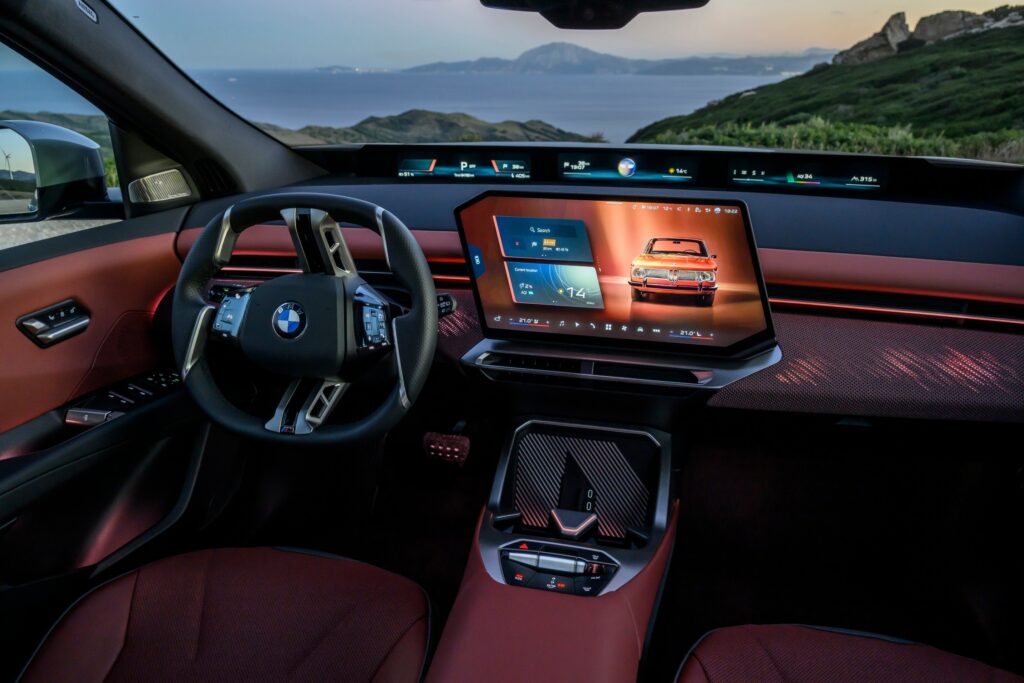
Inside, BMW has completely transformed the vehicle cabin, doing away with traditional physical buttons and the longstanding rotary iDrive controller. Taking center stage is the “Panoramic Vision” display, a full-width projection screen spanning the base of the windshield. Operating as an expanded head-up display visible to all occupants, it keeps critical driving metrics directly in the driver’s natural line of sight.

The driver interacts with a unique “Squircle” steering wheel—a hybrid geometry combining rounded and squared elements inspired by modern game controllers. The wheel spokes feature illuminated touch pods that remain flush with the gloss black trim when the vehicle is off, coming alive with active haptic feedback upon startup.

Below the Panoramic Vision display sits a 17.9-inch matrix-backlit central touchscreen angled aggressively toward the driver. This parallelogram-shaped display pays homage to the driver-centric dashboards of classic 1980s BMW 3-Series models. However, because third-party smartphone mirroring apps like Apple CarPlay and Android Auto are rendered in standard rectangular ratios, the software sits inside a slanted boundary, creating distinct triangular dead zones in the display corners.

To supplement touchscreen controls, BMW integrated an AI-powered Intelligent Personal Assistant backed by Amazon Alexa technology. Drivers can speak natural commands such as “Hey BMW, I’m freezing,” prompting the car to instantly raise the cabin temperature and activate the heated seats.

Cabin Practicality, Sustainable Upholstery, and Canadian Pricing

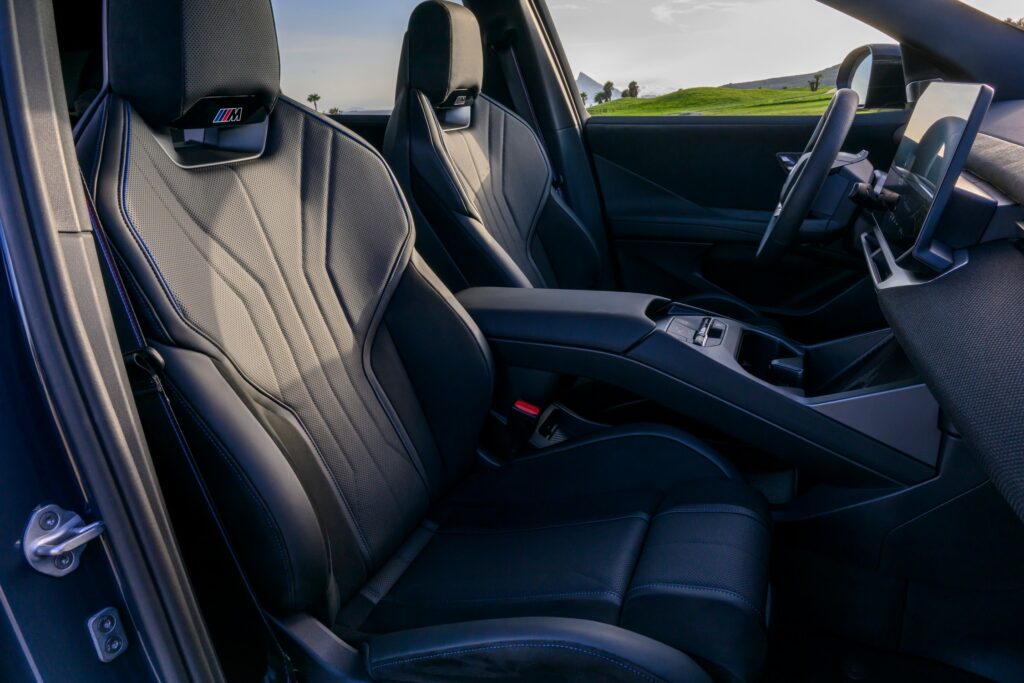
In keeping with the platform’s focus on circularity and sustainability, the standard interior comes wrapped in Verganza, a premium synthetic upholstery crafted from recycled materials. For buyers preferring traditional luxury touches, supple Merino leather upholstery remains available as an option.

Thanks to the dedicated EV architecture and flat interior floor, passenger accommodations are generous. The cabin comfortably seats five adults without a center transmission tunnel intruding on legroom. Rear cargo space is equally functional, easily accommodating sports equipment, luggage, or daily errands.

In Canada, the 2027 BMW iX3 50 xDrive carries a starting MSRP of $75,900 CAD, with a wide variety of exterior paint colors, wheel packages, and interior themes available.

The Final Verdict

The BMW iX3 Neue Klasse successfully bridges the gap between classic BMW driving dynamics and cutting-edge electric innovation. With acceleration that rivals classic M cars, real-world cold-weather range, and an ambitious interior tech suite, it positions itself as a forward-looking luxury crossover.

If you’d like to learn more or test drive the BMW iX3, please get in touch with us at the BMW Store Vancouver or BMW Langley.


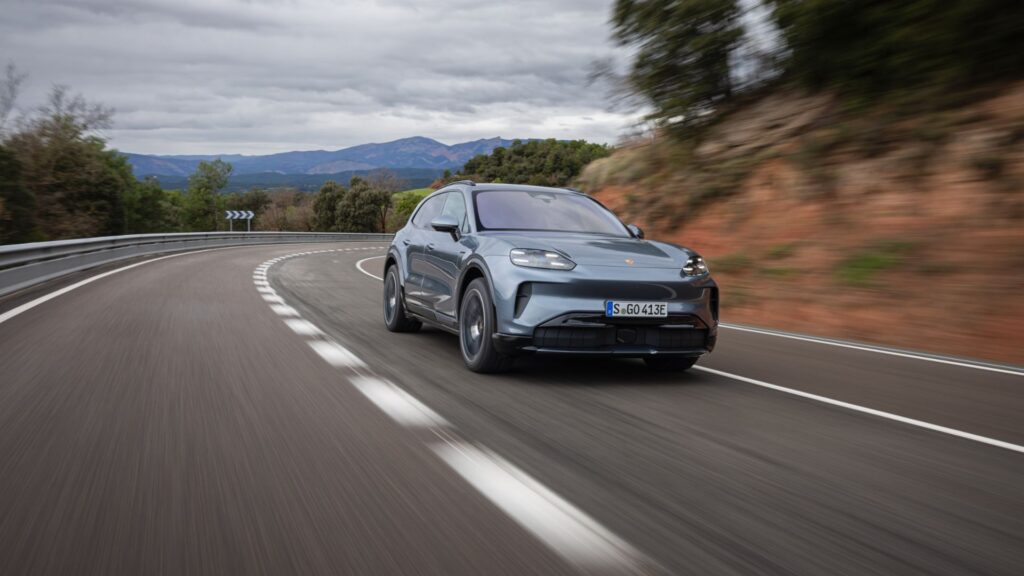
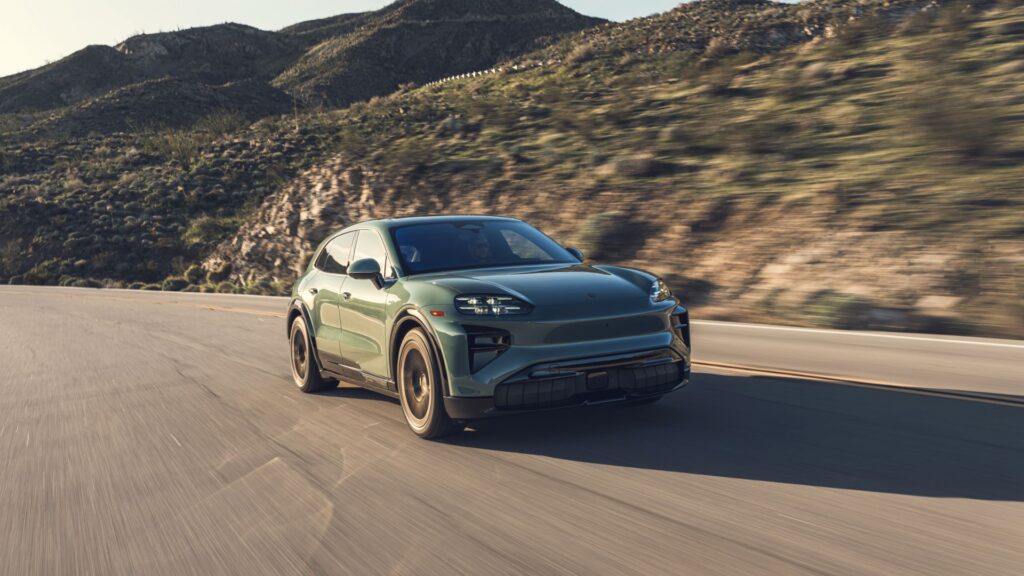
2026 Porsche Cayenne Electric: The Ultimate High-Performance Luxury EV SUV 

For over two decades, the Porsche Cayenne has consistently delivered on an ambitious promise: transforming a heavy, two-ton family SUV into a vehicle that handles like a 911. Millions of sales later, Stuttgart’s flagship SUV has funded racing programs and set the benchmark for performance utility vehicles. Now, Porsche engineers have taken a radical leap forward by swapping the traditional internal combustion powertrain for a massive battery pack. 

The 2026 Porsche Cayenne Electric enters a highly competitive luxury market to answer a critical question for enthusiasts and daily commuters alike: is this all-electric SUV still a proper Porsche, or has it simply become a very fast, ultra-expensive gadget? 

Sleek Design and Dynamic Aerodynamics 

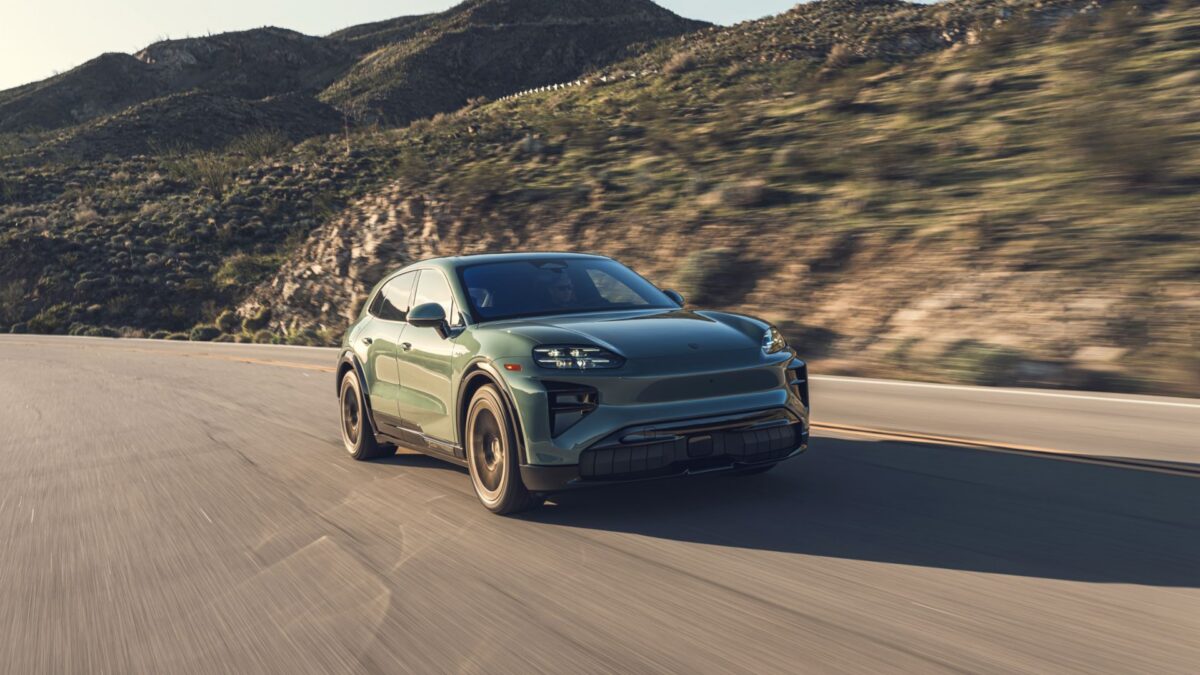
Visually, the Cayenne Electric maintains classic Porsche proportions while adopting a smoother, slightly elongated silhouette compared to its gasoline-powered counterpart. It rides on standard 20-inch aero wheels, with optional 21-inch and 22-inch designs available for a more aggressive stance. Sharp matrix-LED headlights illuminate the front fascia, while a modern light strip featuring illuminated Porsche lettering defines the rear end. 

On the flagship Turbo model, functional aesthetics meet active engineering. At speeds above 65 km/h, motorized aero blades automatically deploy from the rear section to actively reduce drag. This transformer-like feature not only boosts driving range and high-speed stability, but it also brings a captivating sense of design theater to the luxury EV segment. 

A Revolutionary Screen-Driven Interior and the “Ferry Pad” 

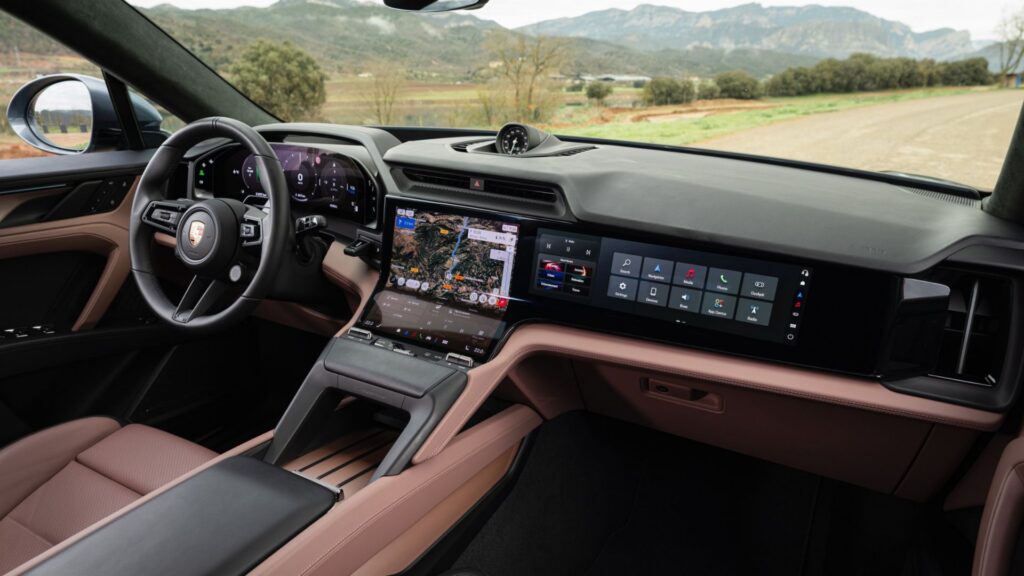
Stepping inside the cabin reveals a tech-forward cockpit dominated by premium display surfaces. The central highlight is a 12.25-inch curved OLED infotainment touchscreen that flows smoothly into the center console, boasting deep contrast levels and crisp resolution. 

Recognizing the common frustration of trying to tap floating touchscreens on bumpy roads, Porsche introduced a clever ergonomic leather ledge situated directly below the main display. Named the “Ferry Pad”, an homage to Ferry Porsche, this resting spot allows drivers to anchor their palm, ensuring natural, steady finger placement along the lower screen controls. 

The software platform is fully widget-based and customizable to individual driver preferences. Navigation maps can occupy the top section of the screen, while essential shortcuts, such as air suspension height adjustments, garage door openers, or controls for the optional electromagnetic panoramic glass roof, remain pinned along the lower curved boundary. 

Drivers are also greeted by a hoodless 14.25-inch curved digital instrument cluster, derived from the Taycan, which handles vital electric powertrain data and full-screen telemetry. Front passengers aren’t left out either, as an optional 14.9-inch display allows them to stream media and watch content on the move. 

Practicality, Frunk Storage, and Cabin Space 

Because the Cayenne Electric is engineered on a bespoke, dedicated electric vehicle architecture, it eliminates the central transmission tunnel entirely. This flat-floor design translates to noticeable cabin gains, offering rear passengers significantly more legroom and foot space. 

Practicality remains paramount for a midsize luxury SUV. Behind the second-row seats, the Cayenne Electric provides over 780 liters of standard cargo capacity. Folding down the 40/20/40 split rear backrests expands total load volume to over 1,500 liters. Additionally, replacing the internal combustion engine opens up a front trunk (“frunk”) perfect for stowing charging cables, mobile gear, or smaller travel bags. 

Adaptive Air Suspension and Physics-Defying Active Ride 

Managing the mass of an electric vehicle is one of the toughest challenges in automotive engineering, and the base Cayenne Electric tips the scales at over 2,500 kilograms. To maintain sharp handling and serene ride quality, Porsche equips the SUV with standard adaptive air suspension. Potholes and rough pavement are smoothed out effortlessly, giving the vehicle a hovercraft-like composure over uneven tarmac. 

Buyers stepping up to the S or Turbo trim levels can select the advanced Porsche Active Ride system. This setup uses hydraulic pumps attached to individual dampers to actively counteract body motion. By rapidly adjusting fluid pressure at each wheel, the system keeps the SUV completely flat under aggressive cornering and heavy braking, offering a smooth, almost weightless driving experience. 

Double-glazed acoustic glass paired with extensive sound insulation keeps cabin noise exceptionally low. However, for drivers missing the soundtrack of a traditional powertrain, Porsche developed an optional Electric Sport Sound system. Engineers recorded the authentic exhaust note of a twin-turbocharged V8 engine and digitally mapped it to the electric motor’s RPM, even mimicking brief torque interruptions to simulate gear shifts. While purists may prefer to turn this feature off via the touchscreen, it adds a familiar, emotive layer to high-speed driving. 

Unmatched Acceleration and Dynamic Handling Specs 

Straight-line performance in the Cayenne Electric spans from quick to mind-bending across its three core trim variants: 

  • Cayenne Electric (Base): Generates up to 435 peak horsepower and 616 lb-ft of torque, accelerating from 0 to 100 km/h in a swift 4.8 seconds. 
  • Cayenne Electric S: Increases performance output to 657 peak horsepower and 797 lb-ft of torque. 
  • Cayenne Electric Turbo: Delivers a staggering 1,139 peak horsepower and 1,106 lb-ft of torque, blasting from 0 to 100 km/h in just 2.5 seconds—putting supercar acceleration into a practical family vehicle. 

The real engineering feat lies in how the SUV corners. Bolted directly into the chassis floor, the massive 113 kWh battery pack lowers the overall center of gravity while acting as a structural member to maximize frame rigidity. Coupled with dynamic motor torque vectoring, optional five-degree rear-axle steering, and Active Ride technology, the Cayenne Electric pivots around tight turns with incredible agility. 

Range, 800-Volt Charging, and Canadian Pricing 

Range anxiety is minimized thanks to the standard 113 kWh battery pack. While official Canadian EPA/NRCan estimates will be finalized closer to launch, European WLTP testing rates the standard model at up to 642 km, which translates to an estimated real-world Canadian range of roughly 530 km depending on driving conditions. 

Charging times are equally impressive thanks to the advanced 800-volt architecture. The Cayenne Electric supports peak DC fast-charging rates up to 390 kW, enabling a 10% to 80% charge in just 16 minutes at a compatible high-speed station. Home charging is equally efficient; opting for the 19.6 kW AC on-board charger completes a 0% to 100% full charge in approximately 6.5 hours. Porsche also prepared the vehicle for future wireless pad charging equipment. 

Canadian Base MSRP Pricing: 

  • Cayenne Electric Base: Starts at $131,300 
  • Cayenne Electric S: Starts at $142,600 
  • Cayenne Electric Turbo: Starts at $178,300 

As expected with Porsche, optional equipment allows extensive personalization. Upgrades such as Oak Green Metallic paint ($3,250), 22-inch wheels ($4,200), Rear-Axle Steering ($1,470), and the Burmester Surround Sound System ($7,980) offer buyers complete control over their vehicle’s final specification. 

Final Verdict: A New Era for Porsche Performance 

While electric propulsion alters the mechanical feedback traditionally associated with gas engines, the 2026 Porsche Cayenne Electric stands out as a triumph of modern engineering. It pairs extreme power and rapid charging tech with exceptional cornering dynamics, high-end luxury, and daily utility. More than just a great EV, it represents a remarkable luxury performance SUV tailored for the modern electric age. 

If you’d like to learn more or test drive the Cayenne Electric, please get in touch with us at one of our Porsche Centre locations or online at www.OpenRoadAuto.com 


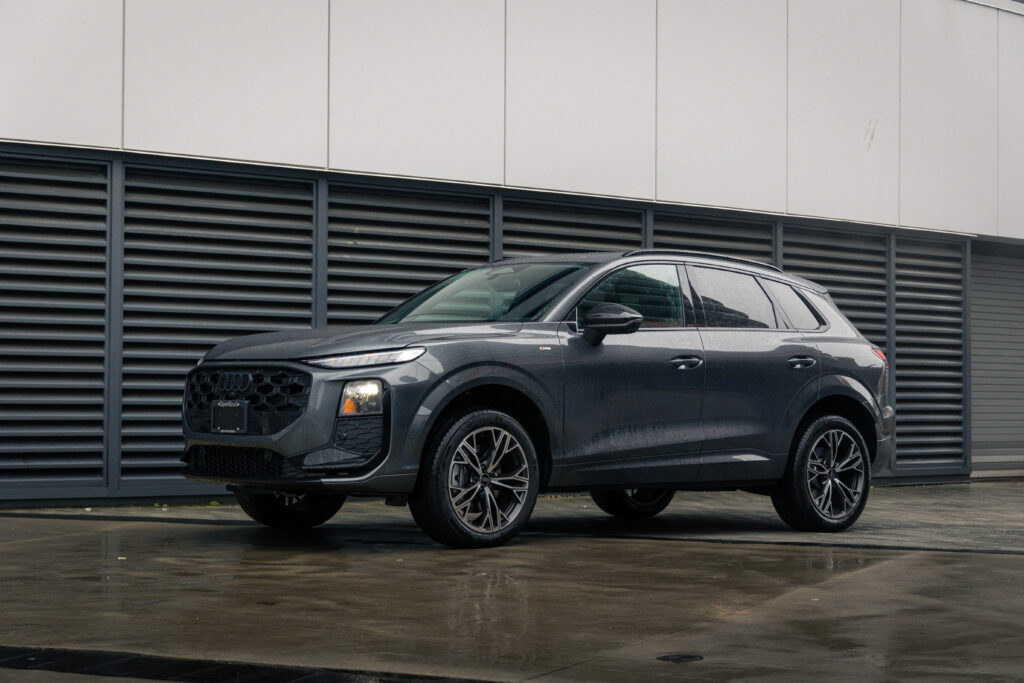
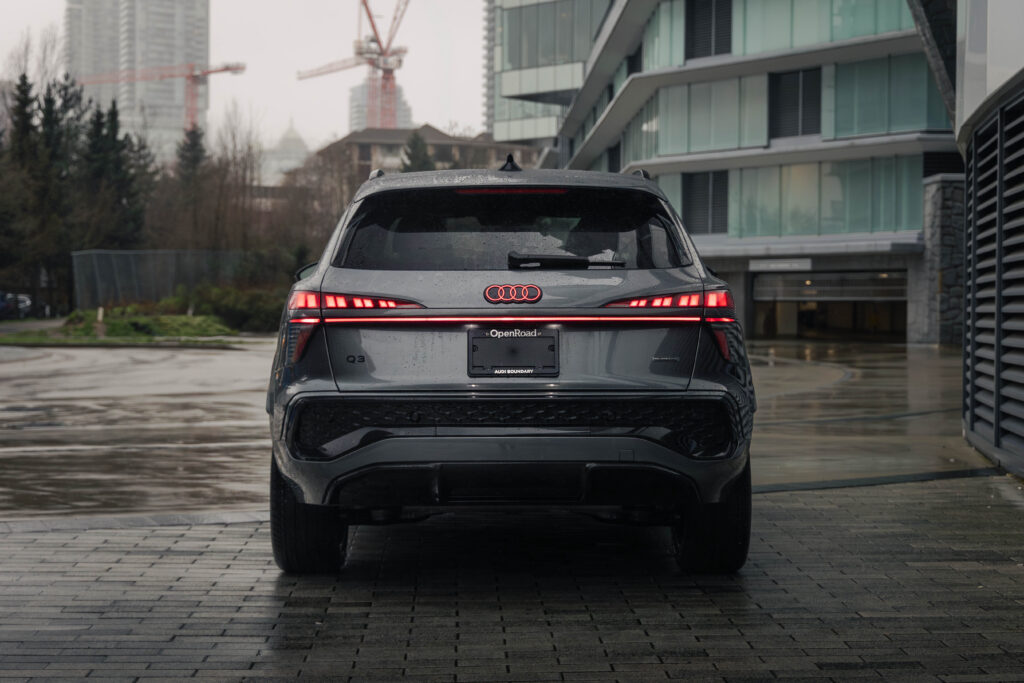
2026 Audi Q3 Review: Small Footprint, Big Technology 

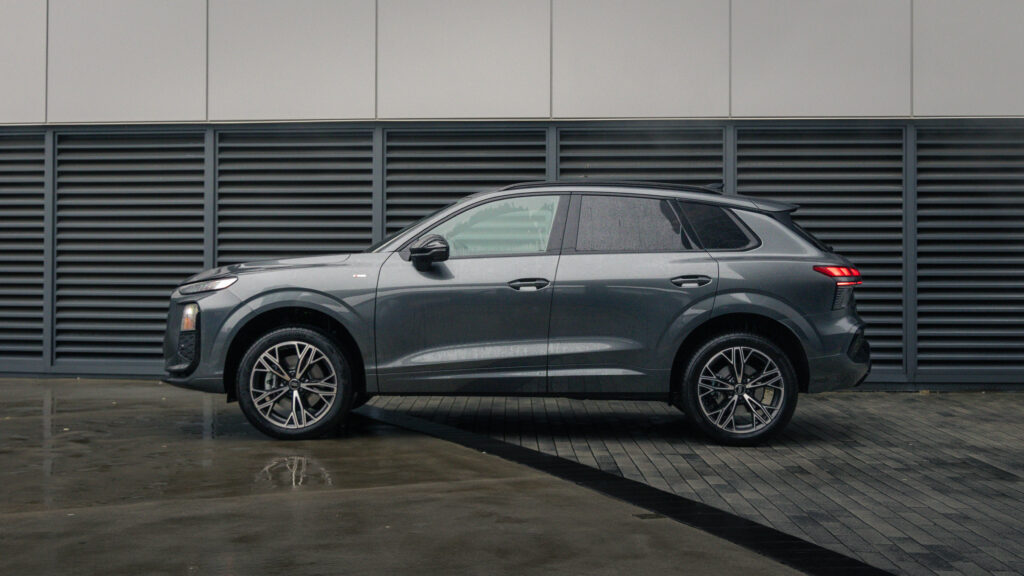
The all-new Audi Q3 holds a unique spot in the lineup: it is the smallest SUV Audi offers in North America. Designed for drivers who want the prestige of the four rings without needing a zip code to park, the latest generation arrives with sharper looks, enhanced performance, and a cabin overhaul packed with high-end tech. 

Starting slightly higher in cost than its chief rival, the BMW X1, does the new Q3 deliver enough value and charm to stand out in an increasingly crowded subcompact luxury crossover segment? 

Performance & On-Road Dynamics 

Under the hood sits a turbocharged 2.0-liter engine outputting 255 horsepower and 273 lb-ft of torque. It’s a noticeable bump over the outgoing model’s 228 hp. Audi estimates a 0–100 km/h time of 5.9 seconds, which feels brisk and energetic for a vehicle of this size. 

Behind the wheel, the 7-speed dual-clutch transmission delivers seamless, silky gear changes during everyday cruising. However, there is a distinct hesitation when you mash the throttle for sudden acceleration, making it feel as though the gearbox takes a momentary pause to realize it needs to downshift. Fortunately, engaging Dynamic mode sharpens the engine response and adds a satisfying weight to the steering, entirely eliminating that digital, weightless steering wheel feel and revealing a surprisingly playful chassis. Switching into Comfort mode lightens the controls significantly, making the vehicle’s compact footprint a breeze to maneuver through tight city streets and parallel parking spots. 

Out on the open road, the Q3 maintains an impressive level of cabin refinement thanks to standard acoustic front door glass that effectively keeps wind and highway noise at bay. The ride quality leans noticeably toward the firmer side, which may not appeal to every driver, particularly since the Q3 lacks the adaptive dampers or air suspension found on its larger Q5 sibling. On the financial side of ownership, the powertrain offers a distinct advantage: unlike nearly all of its luxury competitors that demand premium fuel, the Q3 happily runs on regular gasoline—delivering meaningful savings every time you fill up. 

Interior, Tech & Space 

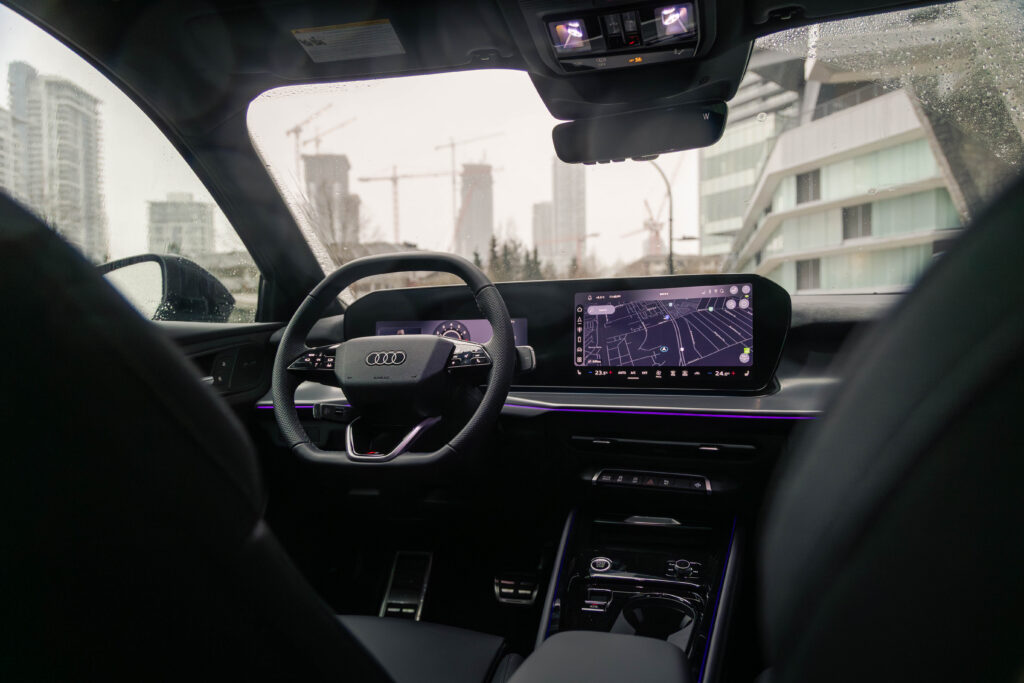
Stepping inside reveals a major generational leap. The dash is dominated by Audi’s “Digital Stage”. It’s a sweeping, curved glass panel containing an 11.9-inch digital driver display alongside a 12.8-inch infotainment touchscreen. 

Powered by Android Automotive OS, the infotainment system goes well beyond standard wireless Apple CarPlay and Android Auto. Drivers can download standalone apps like Spotify and YouTube directly to the vehicle. The system also integrates an AI assistant capable of learning routines, setting navigation, and adjusting climate settings via voice command. 

Using those voice commands might become second nature, as Audi has eliminated most physical buttons and knobs. While adjusting temperature on the touchscreen is simple enough when parked, doing so on a bumpy road or while wearing winter gloves can be a distraction. 

By relocating the gear selector to a drive-by-wire lever behind the steering wheel, Audi has completely reclaimed the center console. This clever redesign leaves room for two properly sized cupholders and a 15-watt cooled wireless charging pad, which actively prevents your smartphone from overheating while powering up on the go. Front-seat occupants benefit from generous legroom, ample headroom, and excellent sightlines all around. In the back, tall passengers pushing 6’4” might find legroom slightly tight, though average-sized adults will sit comfortably, especially given that the rear seats both slide and recline. Cargo space remains a strong point, with 707 liters available behind the second row and expanding up to 1,415 liters when the 40/20/40 split-folding rear seats are stowed flat. 

Pricing & Key Features 

The 2026 Audi Q3 starts slightly above the BMW X1, but the price gap is narrow, approximately $900 between starting base points. The Progressiv trim starts at $51,800 CAD while the Technik trim starts at $55,100 CAD. 

Despite its entry-level positioning in Audi’s crossover lineup, the 2026 Q3 comes impressively well-appointed out of the box. Buyers get premium creature comforts right from the base trim, including leather upholstery, heated front seats, a heated steering wheel, and three-zone automatic climate control. The cabin feels open and airy thanks to a large panoramic sunroof, while daily usability is bolstered by a power liftgate and the wireless charging pad. For drivers seeking an extra layer of tech sophistication, a head-up display is also available as an option. 

The Verdict 

Audi took its smallest crossover and elevated every meaningful detail: more horsepower, sharper exterior styling, and a massive technology upgrade. While the touch-only climate controls and firm ride require a small compromise, the combination of brisk performance, running on regular fuel, and an executive-level cabin make it a compelling choice. 

It may not be the bargain option of the segment, but the 2026 Q3 delivers a sophisticated, highly polished sanctuary for the daily commute. 

To learn more or schedule a test drive with the all-new Q3, contact the team at OpenRoad Audi Boundary. www.OpenRoadAudi.com 


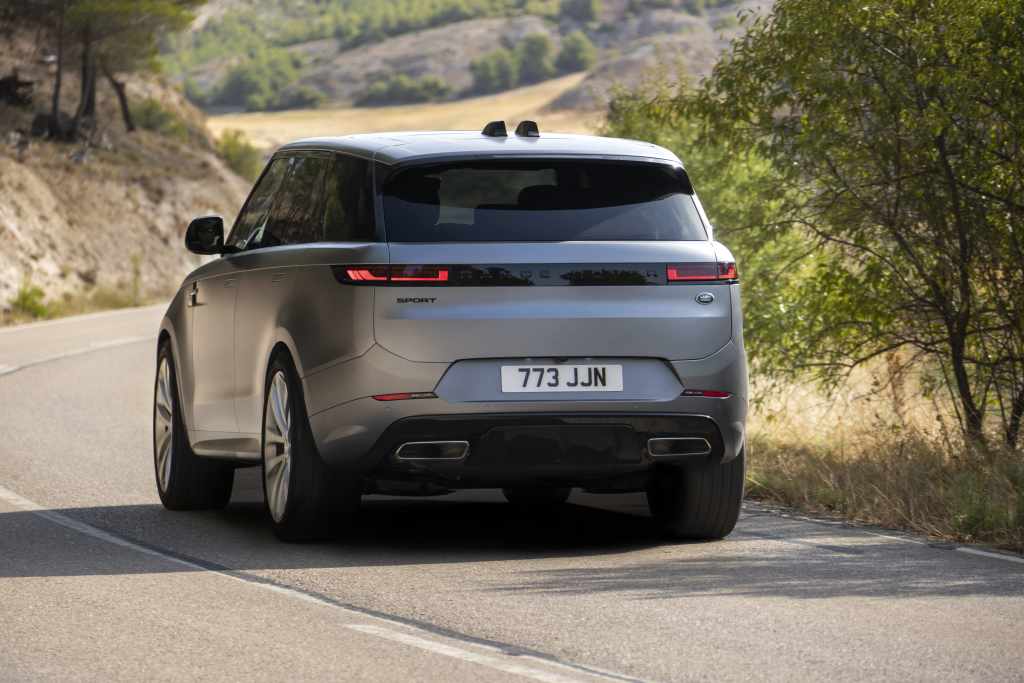
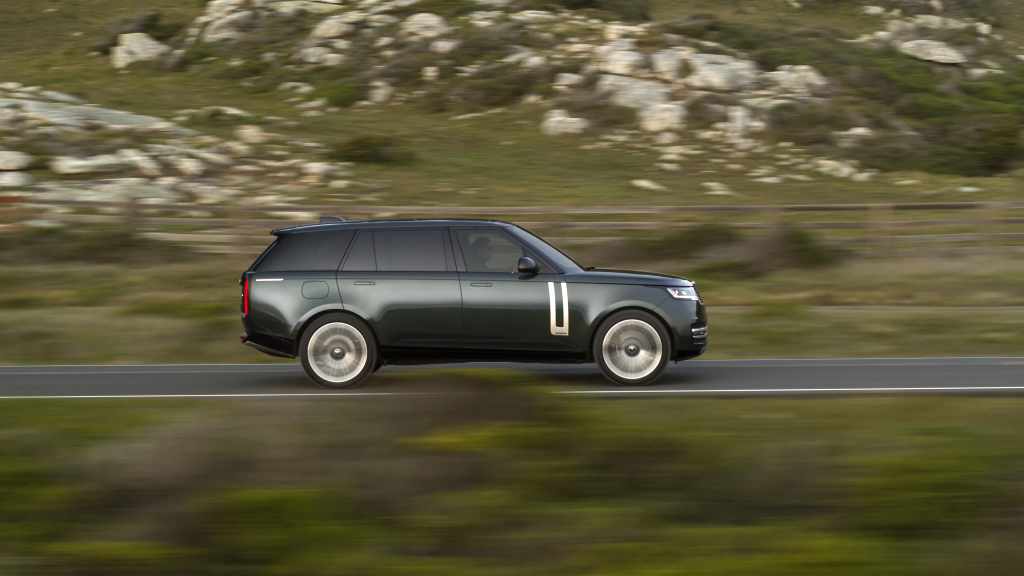
2026 Range Rover Sport S: The “Base” Model That Blushes the Competition

Driving in Canada often demands a vehicle capable of tackling everything. From snow-covered mountain passes and gravel forest roads to high-speed highway blasts and dense city commuting—sometimes all in a single afternoon—versatility is essential. The Range Rover Sport promises to manage it all with sophisticated British style.

While the Range Rover Sport lineup offers high-end performance tiers, including a fierce 626-horsepower twin-turbocharged V8, the entry-level “S” trim proves you do not need to buy the most expensive model to experience true luxury.

Restrained, Mature Design

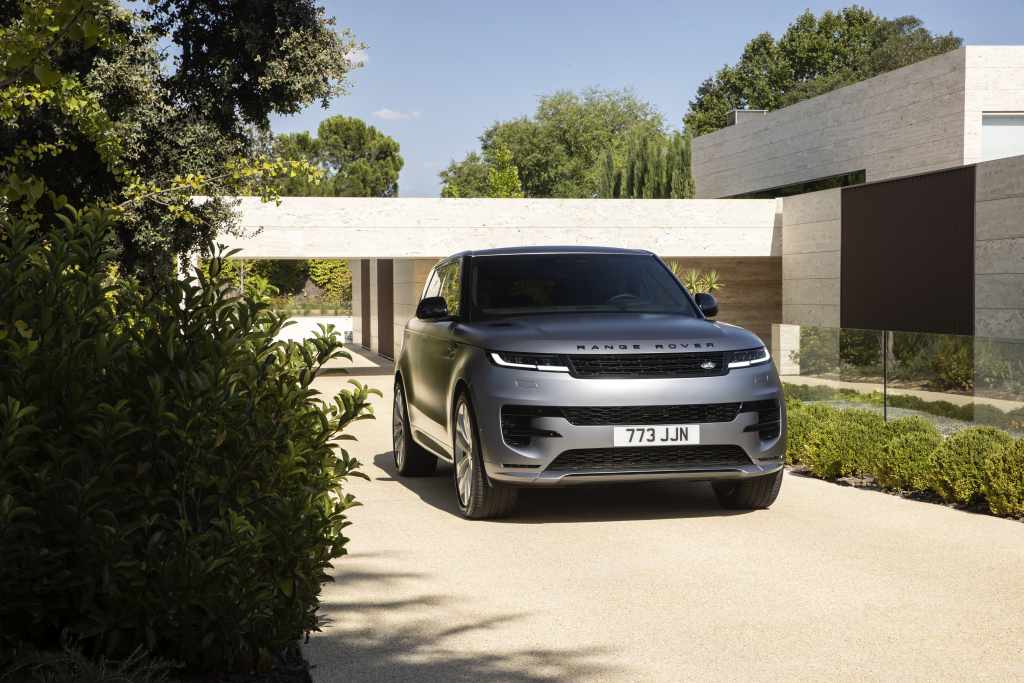
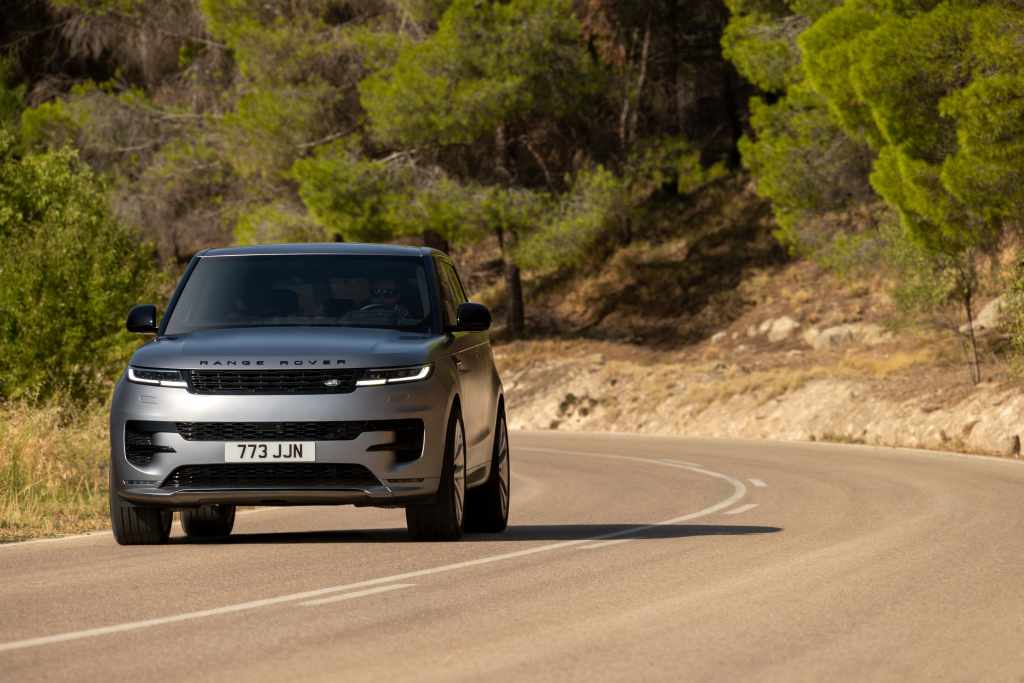
Visually, the Range Rover Sport embraces understated elegance rather than loud, dramatic changes. It features smooth lines, minimal harsh angles, and flush door handles that pop out automatically upon approach. Free of flashy grilles or ostentatious body cladding, its clean surfaces look right at home whether parked outside a ski chalet in Whistler or cruising along Robson Street in downtown Vancouver.

Performance and Ride Quality

Under the hood, the baseline Sport S features a 3.0-liter turbocharged inline-six engine paired with a mild hybrid system. Producing 355 horsepower and 369 lb-ft of torque, this powerplant launches the heavy SUV from 0 to 100 km/h in a swift 6 seconds. The power delivery is exceptionally smooth, offering more than enough muscle for assertive highway passing.

What truly elevates the driving experience, however, is the standard electronic air suspension system—a premium feature that rival manufacturers typically lock behind expensive upper-tier packages. The air suspension effortlessly glides over potholes and harsh road bumps. It also actively adapts to driving conditions, lowering the vehicle at highway speeds to maximize aerodynamics and raising the ride height for clearing rougher terrain off the beaten path.

All-Weather Capability

While it isn’t meant to venture quite as deep into the wilderness as its rugged sibling, the Land Rover Defender, the Sport S easily conquers unpaved terrain. It comes standard with Terrain Response 2, an advanced system that automatically adjusts engine, transmission, and chassis parameters to match the surface below. Drivers can also manually toggle through specific modes like Snow, Mud, and Sand. Backed by hill launch assist and gradient acceleration control, it firmly earns its Land Rover capability credentials.

Fuel economy balances out at 12.9 L/100km in the city and 9.6 L/100km on the highway. Thanks to the mild hybrid system, the automatic start/stop function operates with minimal vibration, and a massive 90-liter fuel tank allows for roughly 700 kilometers of driving range between fill-ups.

Private Jet Luxury Inside

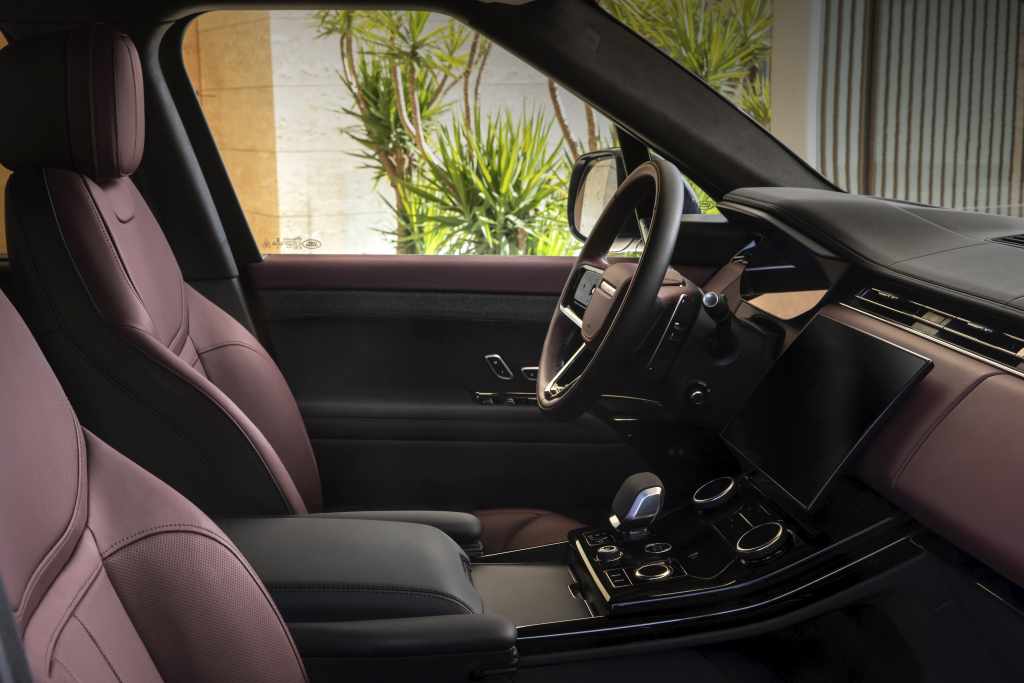
The interior of the Sport S mimics the cabin of a high-end private jet, matching rich leather upholstery with brushed aluminum trim and a massive standard panoramic sunroof. Positioned in the center of the dashboard is a 13.1-inch curved touchscreen operating a clean, modern infotainment system.

The standard features list puts many competing luxury SUVs to shame:

  • A premium Meridian sound system
  • Heated, 12-way adjustable front seats and power-reclining rear seats
  • A power-adjustable heated steering wheel and dual-zone climate control
  • Wireless Apple CarPlay and Android Auto
  • A heated windshield to melt winter frost without needing to step outside into the cold

Practicality isn’t sacrificed for style, either. The cabin accommodates adults comfortably in both rows, offering about 600 liters of trunk volume that expands to a spacious 1,500 liters with the rear seats folded flat.

Pricing

The Range Rover Sport S starts at $94,950 CAD, scaling up to roughly $115,000 CAD when optioned out with premium paint, distinct wheels, and optional feature packages. It delivers a complete, uncompromised luxury experience with a slightly friendlier price tag.

To experience the luxury and all-weather performance of the Range Rover Sport firsthand, contact the team at OpenRoad Jaguar Land Rover Langley or explore online at OpenRoadAuto.com to book your test drive.


2026 Toyota RAV4 – A New Era for an Icon

In Canada, a few things are absolute certainties: unpredictable winters, a morning run to Tim Hortons, apologizing when someone else bumps into you, and the Toyota RAV4. For years, this practical crossover has dominated the Canadian landscape as the country’s best-selling SUV.

For 2026, Toyota has completely refreshed the RAV4. While it maintains its ultra-practical, sensible reputation, look beneath the surface and you will find a massive shift. The latest generation brings premium cabin materials, a heavy dose of new safety tech, and a major strategic pivot: it is now exclusively hybrid.

A Modernized Exterior

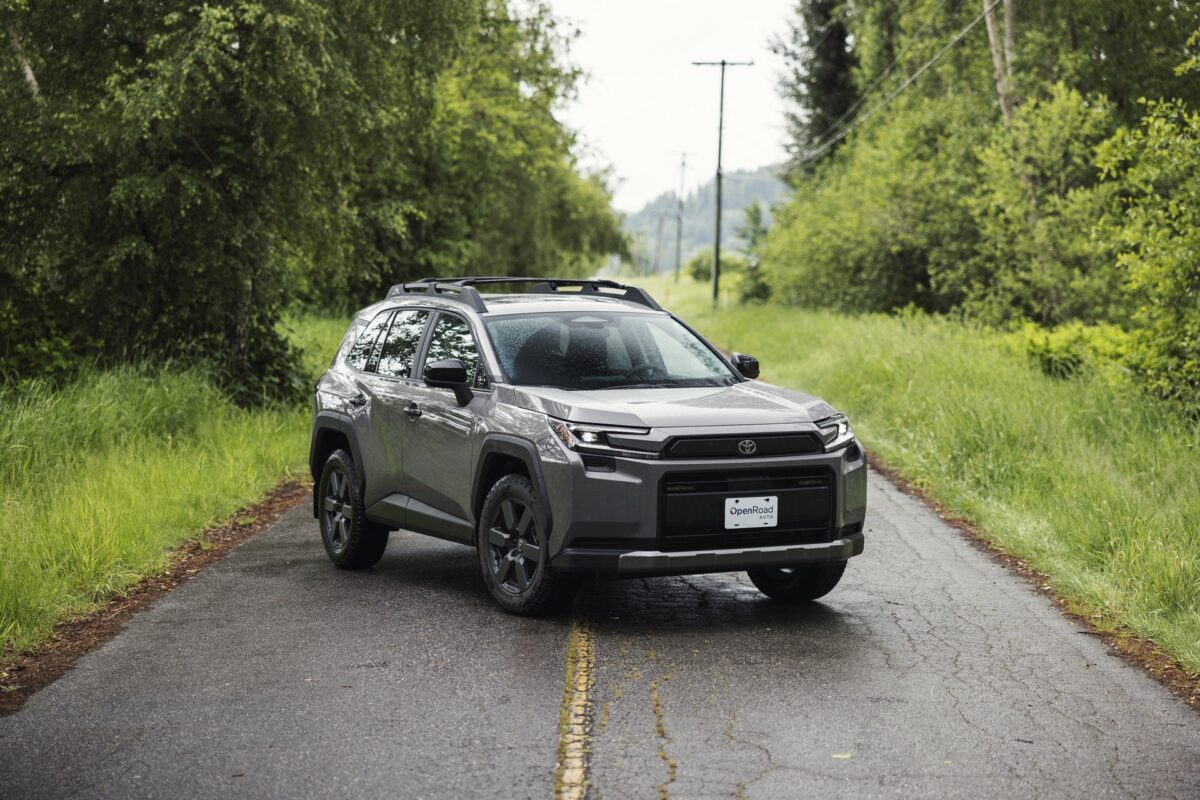
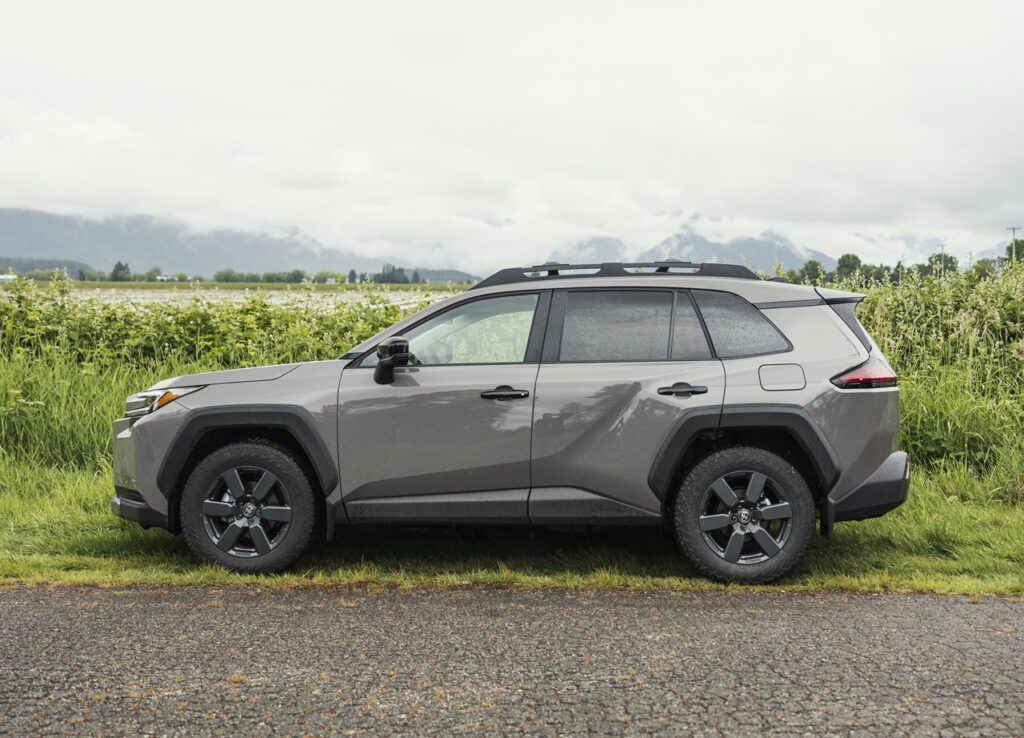
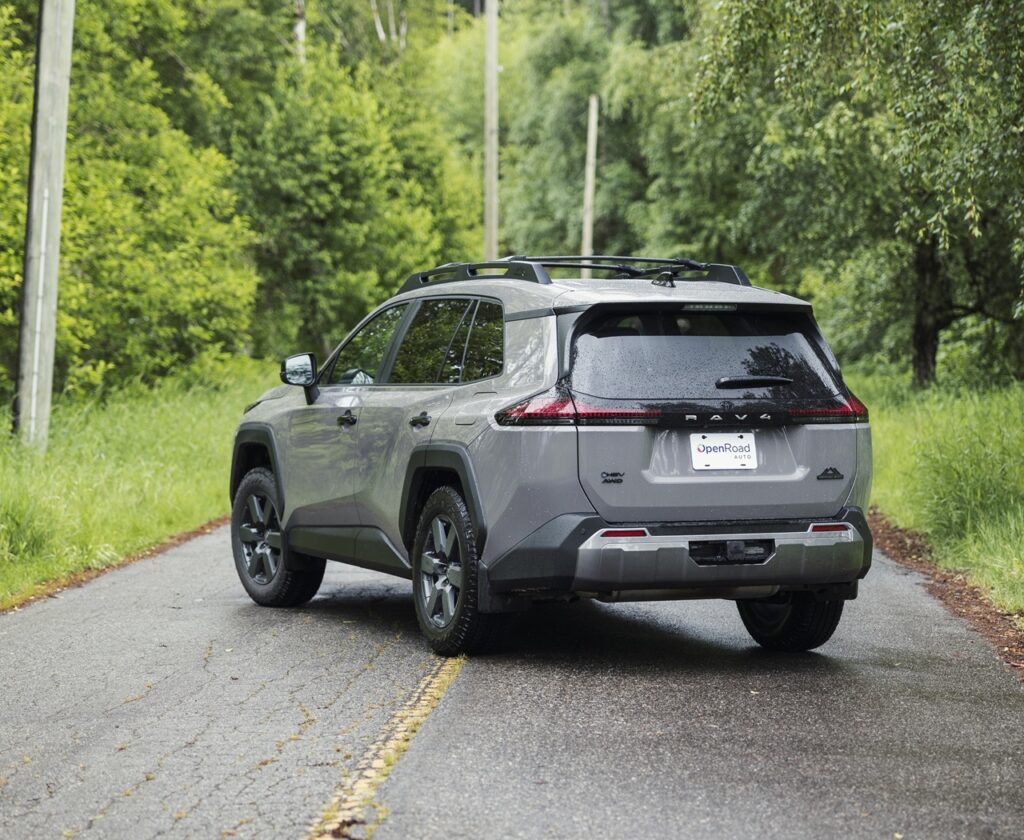
The exterior styling receives a sleek, contemporary update. Up front, it inherits the distinct daytime running lights seen on the Prius, forming what Toyota calls a “Hammerhead front fascia.” This gives the SUV a sharper, more squared-off appearance. Along the side, sculpted body lines run toward the rear, complemented by wheel options ranging from 17 inches up to 20 inches. Around back, the changes are wrapped up with slimmer, more athletic taillights and exhaust pipes hidden neatly behind the rear bumper.

A Welcome Cabin Upgrade

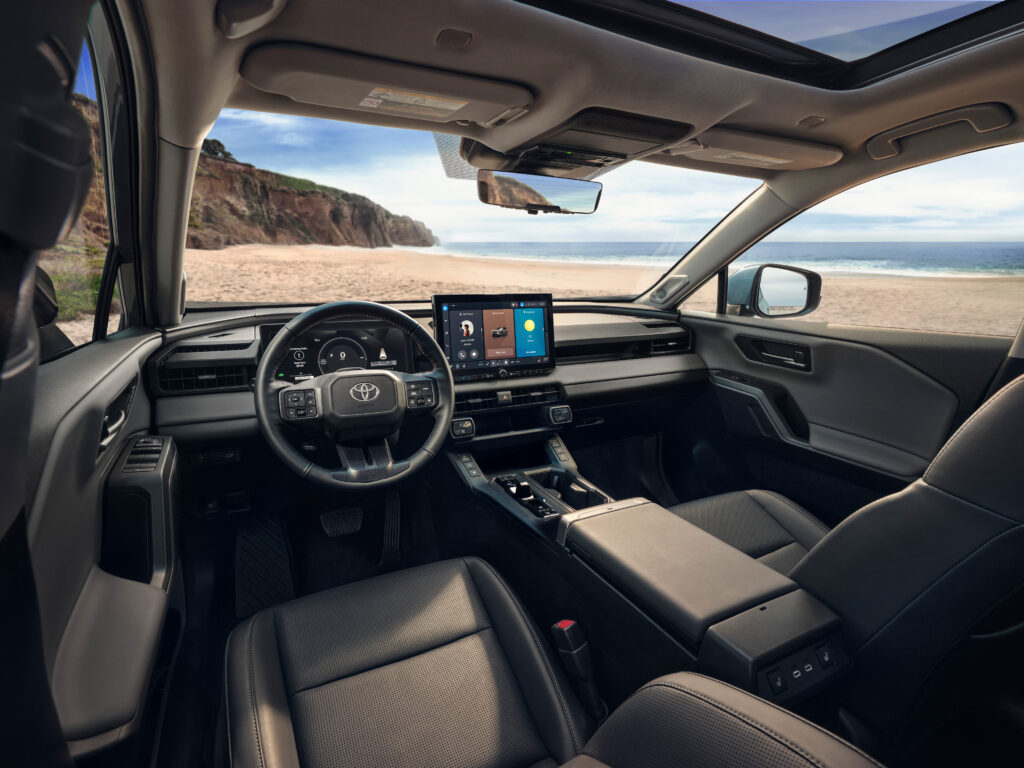
Inside the cabin is where drivers will notice the biggest leap forward. The previous generation relied heavily on hard, uninviting plastics. This version swaps those out for far more soft-touch materials across the door panels, dashboard, and center console, creating a much warmer and more welcoming atmosphere.

Space remains a strong suit. Even a 6’4″ driver will find plenty of headroom and legroom up front. In the second row, passenger space is equally accommodating; a minor hump remains in the center floor, but it is less intrusive than in competing vehicles, and rear passengers are treated to dedicated air vents.

For cargo, the RAV4 delivers a generous 1,070 liters of trunk space—plenty of room for bulky suitcases, pets, or an extensive IKEA run, thanks to a wide, square trunk opening.

Smart Technology & Tactical Controls

Toyota has wisely resisted the industry trend of burying every single control inside a screen. The RAV4 retains physical tactile buttons for the climate controls, drive modes, and steering wheel functions, making it incredibly intuitive to operate on the go.

That said, digital tech gets a massive upgrade via a prominent central touchscreen. Lower trims come equipped with a 10.5-inch display, while the premium XSE and Limited trims boast a crisp 12.9-inch screen running Toyota’s latest, highly simplified infotainment software. The system features a 5G connection for seamless streaming radio and navigation, alongside wireless Apple CarPlay and Android Auto.

Depending on how you spec it, the feature list can be packed with premium touches. A heads-up display (HUD) and a digital rearview mirror, heated seats in all four positions and ventilated front seats, durable SofTex upholstery and a large panoramic sunroof, dual wireless phone chargers and a power-operated liftgate.

Hybrid Performance and Safety

On the safety front, Toyota Safety Sense 4.0 comes standard. This comprehensive suite includes automatic high beams, dynamic radar cruise control, lane departure warning, lane tracing assist, a pre-collision system, proactive driving assist, and road sign assist. Higher configurations add layers of protection like a blind-spot monitor with rear cross-traffic alert, safe exit assist, parking sensors with automatic emergency braking, and a 360-degree panoramic view monitor.

Under the hood, choices are strictly electrified, and All-Wheel Drive (AWD) is standard across the entire lineup. The standard hybrid powertrain consists of a 2.5L naturally aspirated 4-cylinder engine that is augmented by a couple of electric motors. Total system out is up to 236 hp. The optional powertrain is a plug-in hybrid variant. This uses the same base engine but with a more powerful electric motor. It’s capable of returning up to 80 km of electric-only driving range.

Even the rugged, off-road-oriented Woodland trim with its terrain-focused tires remains incredibly efficient, netting 5.7 L/100km in the city and 6.7 L/100km on the highway. On the road, the steering is light and effortless—perfect for navigating tight parking spots in downtown Vancouver.

Pricing and Canadian Heritage

The updated RAV4 starts at a highly competitive $37,500 CAD for the entry hybrid model, scaling up to $52,000 CAD for the top-tier Limited trim. The highly anticipated Plug-in Hybrid variant is expected to start at $48,750 CAD, topping out at $57,500 CAD for the sport-tuned GR Sport trim.

Ultimately, this SUV remains tailor-made for the Canadian lifestyle. It shrugs off rough winters, saves money at the pumps, and fits a mountain of gear. Best of all, it is built locally right here in Canada, meaning buyers don’t have to worry about import tariffs.


Battle of the Behemoths – Lexus LX700h vs Land Rover Range Rover

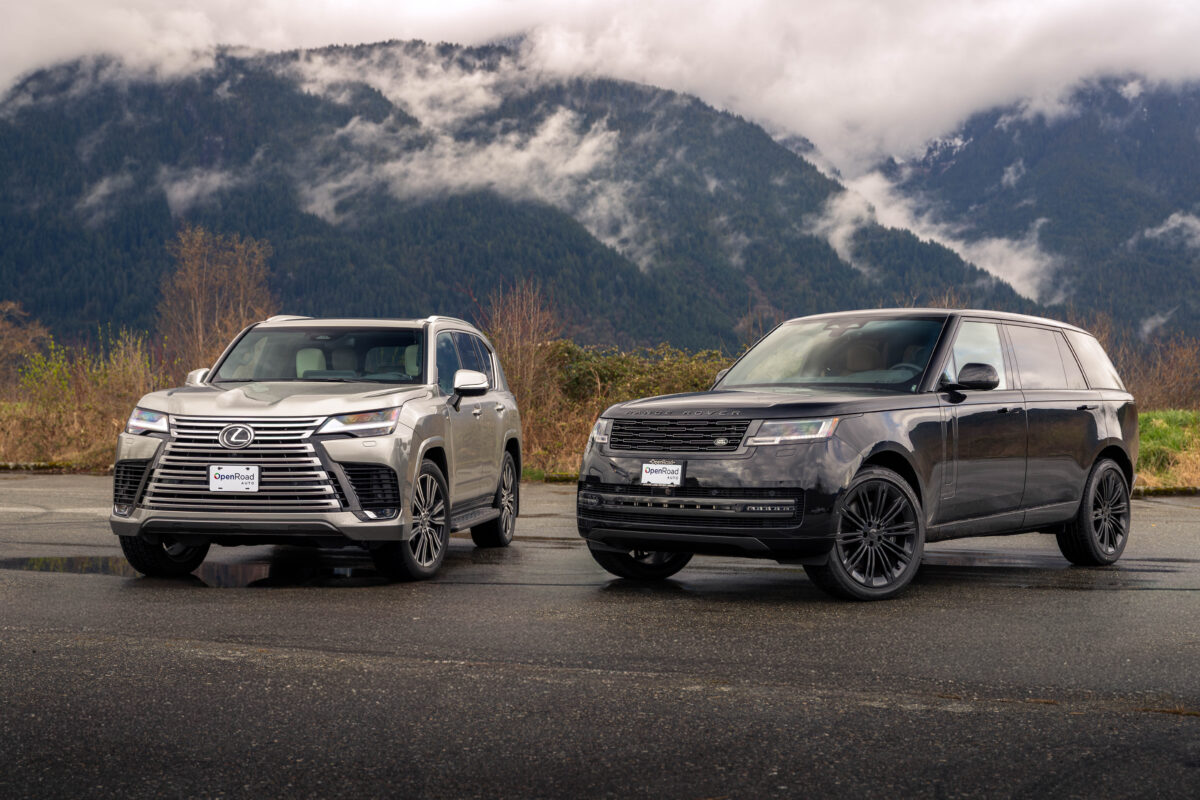
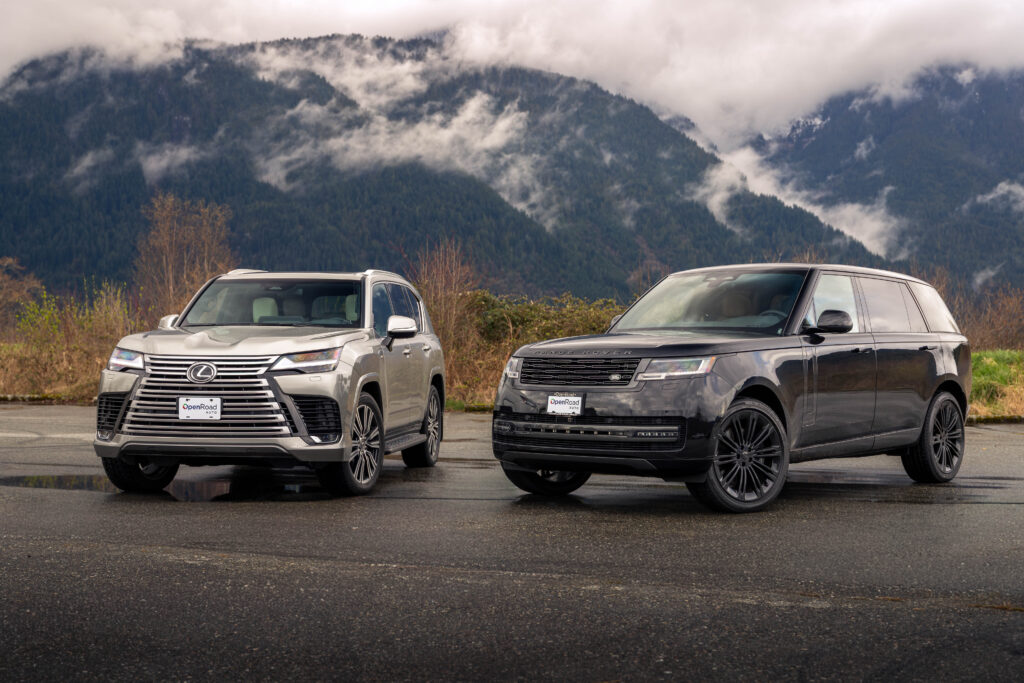
Big, expensive, and unapologetically opulent. Two titans of luxury off-roading. There’s the brand-new Lexus LX700h, now with hybrid muscle and a reputation for lasting longer than the scenery behind it. And next to it, the ever-so-English Range Rover. It’s as suave as it is sophisticated, the go-to chariot for the well-heeled and well-mannered. But here in Canada, where luxury meets snow drifts and 91 octane costs more than gold, which one actually makes more sense?

Design

The Lexus LX700h looks like it’s been carved out of a single block of steel. Sharp creases, dominating grille, and enough polished aluminum to blind a moose at sunrise. It’s unmistakably Japanese — bold, confident, and about as subtle as a hockey brawl. 

Meanwhile, the Range Rover keeps its minimalist elegance. That clean profile and floating roofline still turning heads since… forever. It’s less ‘look-at-me’ and more ‘I-own-a-private-island.’ 

If you’re after street presence, the Lexus wins for drama. But for pure class? The Range Rover takes it. No contest. 

On the inside, the Range Rover’s cabin is an art gallery of understatement. Windsor leather options, 16-speaker Meridian 3D sound system, and a touchscreen that actually doesn’t make you pull your hair out. Add in heated, cooled, and massaging everything — including your ego.

With the long wheelbase option ticked off, the Range Rover seats 7 in utmost comfort, including those in the 3rd row. But if you skip the extra seats and go for the Executive Class rear setup, things get properly decadent. You get two individual recliners that heat, cool, and massage in near silence, separated by a full-length console with touchscreen controls and deployable walnut tables. It’s business-class travel with better suspension.

The LX700h stays true to its Land Cruiser roots. 7 seats, plenty of room for the kids, hockey gear, and a week’s worth of camping supplies. But the third row still feels more like a penalty box than a lounge. It’s very tight if you’re over 6 feet tall.

However, tick the box for the Executive VIP package, and it transforms the second row into something fit for royalty. Out go the three bench seats, and in come two enormous captain’s chairs with full recline, ottoman leg rests, ventilated and heated cushions, and even a built-in massage program. You also get a rear touchscreen control panel, separate climate zones, and a Mark Levinson sound system that somehow makes road noise vanish into thin air. It’s less family SUV and more private jet experience. 

Technology

On the tech side, both spoil you with toys. Adaptive cruise, lane guidance, 360-degree cameras, auto parking, and enough driver aids to make a pilot jealous. But the Range Rover’s tech feels more integrated, almost invisible. Its new Pivi Pro 2 infotainment runs on a 13.1-inch curved display that responds instantly. Add wireless updates, Alexa integration, and a digital key through your smartphone, and it starts to feel like you’re in Silicon Valley. Even the four-zone climate system can preheat or cool the cabin from your Range Rover app before you’ve even put on your coat. 

The Lexus takes a different approach. Less flash, more dependability. You still get all the assists like adaptive cruise, lane trace, blind-spot monitoring, and so on, but Lexus deliberately leaves a few physical controls in place, knowing some of us prefer a proper button when it’s minus twenty outside.  

Add in a head-up display, crisp cameras, and bulletproof consistency, and it’s technology that feels built to last, not just to impress. So yes, the Range Rover dazzles with screens and software. The Lexus? It just works — and in a Canadian winter, that might be the smarter kind of genius. 

Powertrain

Under the hood, the LX700h packs a 3.4L twin-turbo hybrid V6. 457 hp & 583 lb-ft of torque all sent through a 10-speed automatic transmission. 0-100 km/h takes around 6 seconds, which is not too bad for something that weighs as much as a small cottage. 

The hybrid system fills in the gaps between gear changes, so power arrives in an effortless wave. There’s no drama, just torque. It’s a smooth, electric shove that makes it feel smaller and lighter than it is. 

The LX rides on a body-on-frame chassis which means that it can shrug off small craters in the road. However, there’s no hiding that weight. You feel it through the turns. But it’s not trying to be sporty. It’s trying to be effortless, and in that way, it absolutely delivers. 

The Range Rover, on the other hand, doesn’t just have power; it has theatre. You can get it with a 395 hp inline-6 with a mild-hybrid system, or a 4.4L twin-turbo V8 with up to 607 hp. 0-100 km/h comes up in under five seconds, which is faintly ridiculous for something this tall, this heavy, and this dignified. 

Out on the road, the V8 feels endlessly smooth. There’s no real sense of turbo lag, just a deep well of torque from barely above idle. With the adaptive air suspension keeping the body flat, it corners with far more grace than its size suggests.  

It’s not the most efficient luxury SUV with a combined fuel economy rating of 12.9 L/100km for the V8 while the LX700h can achieve up to 11.7 L/100km combined. But you can opt for the plug-in hybrid version of the Range Rover with up to 90 km of gasoline-free driving range. Plug it in overnight, and you can do most weekday drives without burning a drop of fuel. 

Off-Road

Of course, all this luxury doesn’t mean much if you’re stranded the moment the pavement ends. And both of these beasts carry the kind of off-road reputation most crossovers can only dream about. 

The Lexus LX700h rides on proven Land Cruiser hardware, complete with full-time four-wheel drive, locking center differential, and multi-terrain select modes. Add in its hybrid torque delivery, crawl control, and a low range that’ll pull you up a rocky trail like a winch. 

The Range Rover, though, approaches off-roading with sophistication rather than brute strength. Its Terrain Response 2 system automatically adjusts air suspension, throttle, and traction control for whatever nature throws at it. And with up to 11.6 inches of ground clearance and a water wading depth over 35-inches, this thing could practically ford a small river on your drive to Whistler. 

Pricing

Now for the tough part, the price. The Lexus LX700h stars at $138,191 CAD with the top spec Executive VIP costing north of $173,000 CAD. 

The Range Rover starts at $133,000 CAD but once you add in every option, and there are A LOT of options, you’re easily looking at over $300,000 CAD.  

So, these are two different approaches to luxury. If you value bulletproof engineering, long-term reliability, and modest running costs, the Lexus is the smarter choice. But if you crave refinement, technology, and that intangible sense of prestige, the Range Rover still sits at the very top of the luxury food chain. 

One’s built to outlast civilization; the other, to rule it. Either way, lucky are those choosing between them.  

If you’d like to know more or test drive either of these luxury SUVs, please get in touch with us at OpenRoadAuto.com 


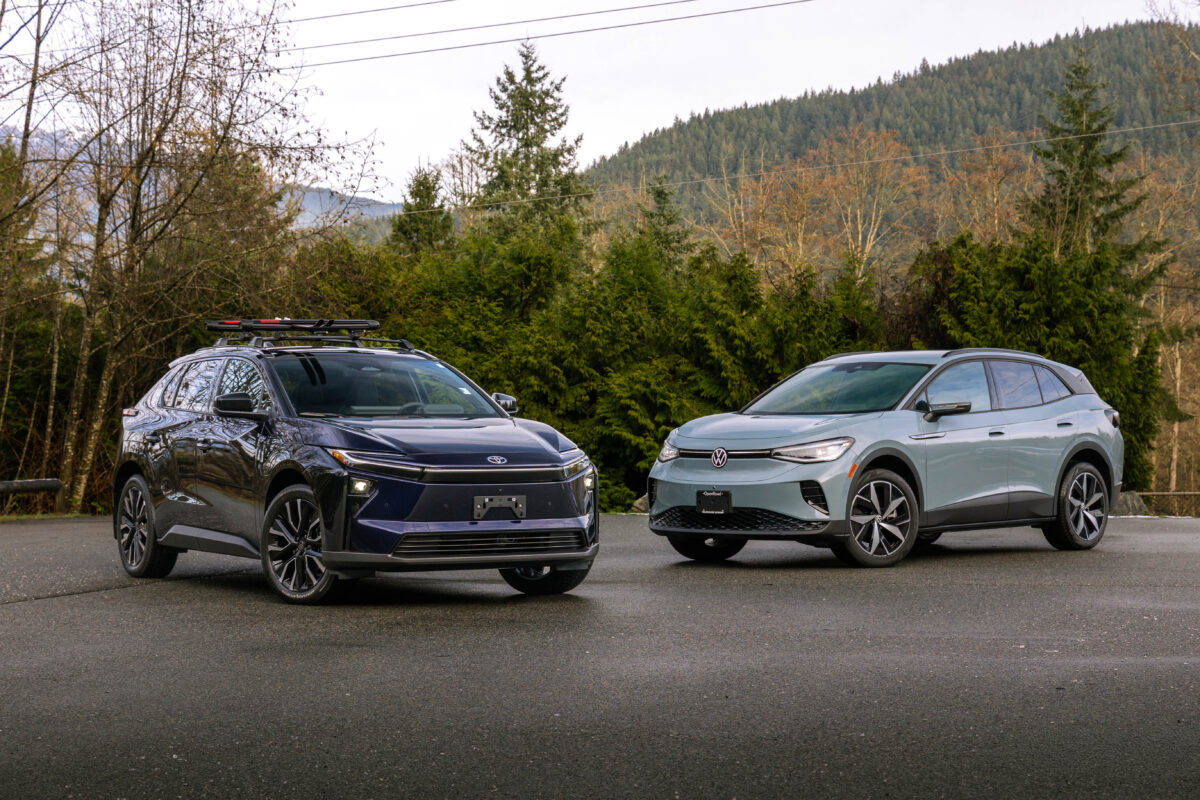
Comparing the updated 2026 Toyota bZ against the 2026 Volkswagen ID.4 

The electric crossover market has become one of the most competitive spaces in the automotive industry, and few models illustrate that better than the Toyota bZ and Volkswagen ID.4. Each represents a distinct approach to electrification. 

Design 

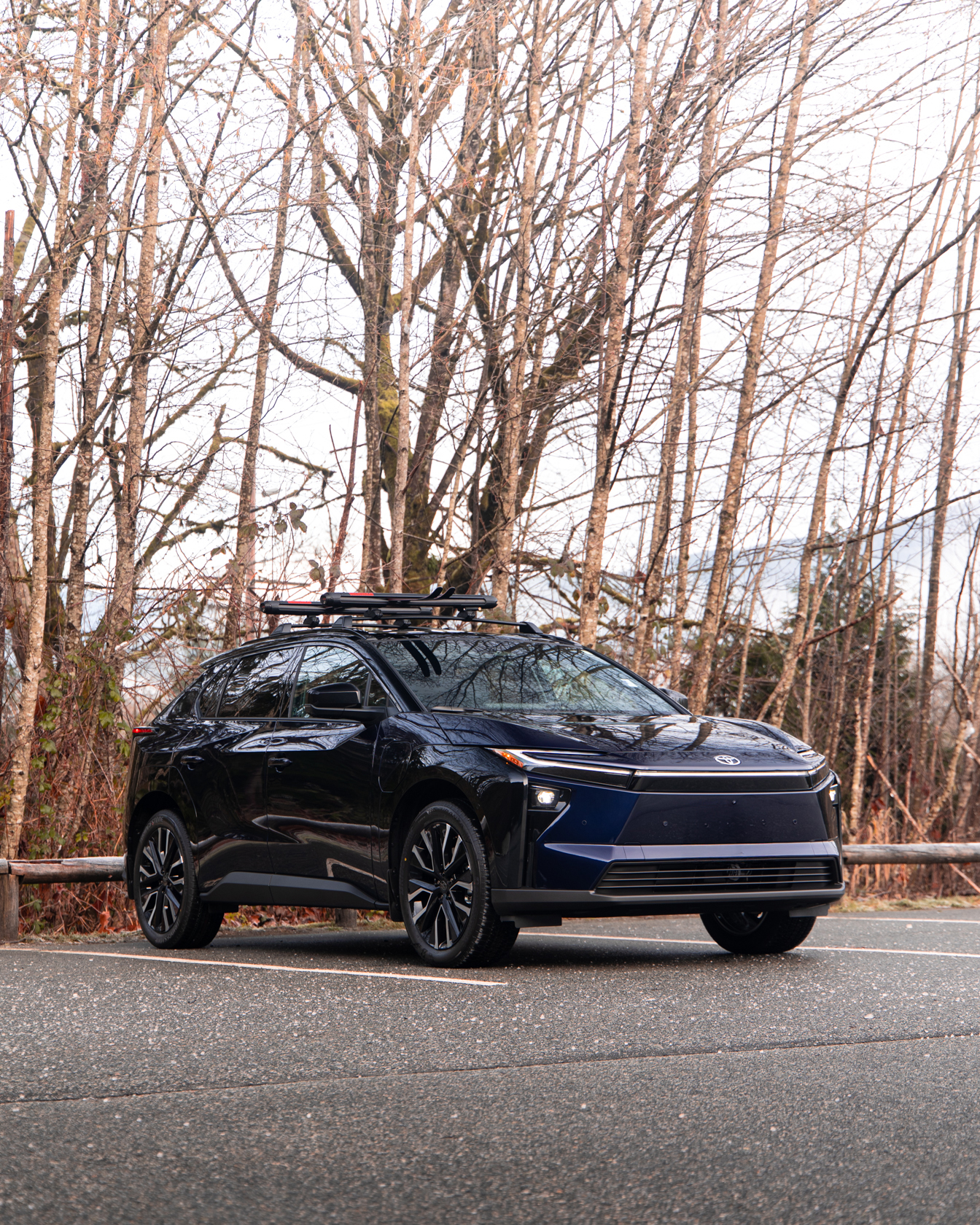
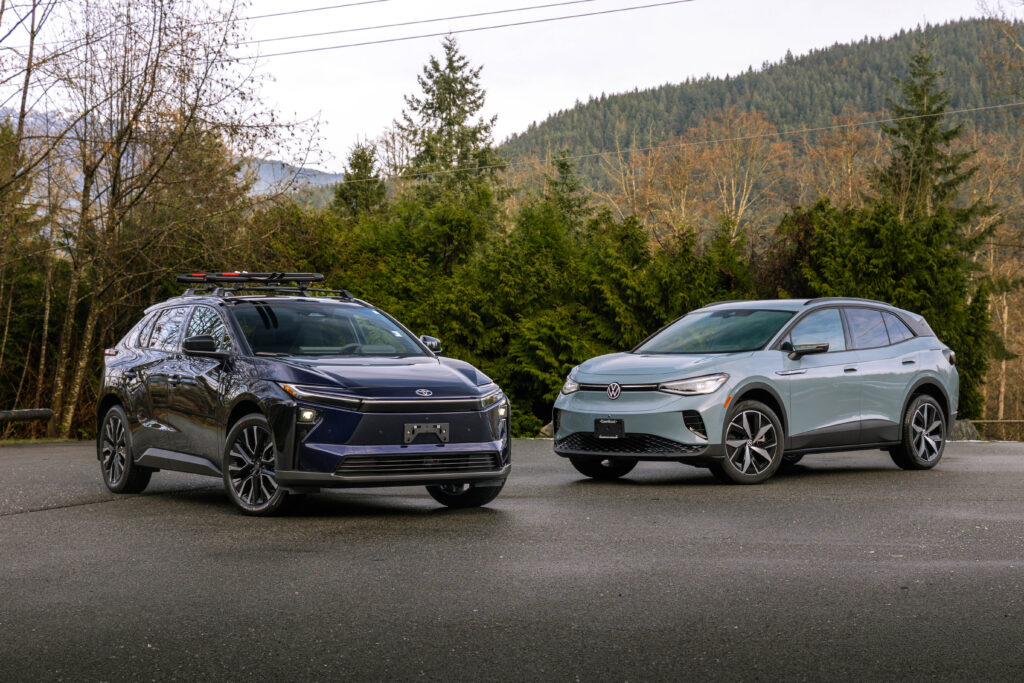
At first glance, these two take different approaches to exterior styling. The Toyota BZ mixes a modern and rugged design with its two-tone paint scheme and newly designed LED headlights. The Volkswagen ID.4 looks more traditional; more like a gasoline powered crossover SUV than an electric vehicle. 

The differences continue to the inside of each EV. The Toyota bZ’s interior design is quite different from any other electric vehicle. The center console and infotainment are pretty simple to use, but the driver instrumentation display and steering wheel are unlike anything else. It’s unique, but not everyone will love it. 

Interior space is good in the front seats, but rear occupant space is a bit less than the Volkswagen. It’s a similar story in the trunk with the ID.4 accommodating more cargo than the Toyota bZ. 

The Volkswagen ID.4 takes a simpler approach to interior design. But it may be a bit too simple for some. Volkswagen uses capacitive touch controls on the steering wheel which you may inadvertently touch while turning, which may change the radio station or turn up the radio volume. The climate also uses capacitive touch controls just underneath the infotainment touchscreen which can be a bit finnicky to use while driving. 

But when it comes to space, the ID.4 has the most amount of headroom and more rear legroom than the Toyota. Plus, it can swallow more family cargo in the back than the bZ. 

Powertrains 

You can get the ID.4 with up to 335 hp. That is with the larger battery pack and with AWD. The RWD version with the larger battery produces 282 hp while the base trim with the smaller battery produces 201 hp.   

To drive, the ID.4 feels like a German car should. It’s stable, smooth, and competent around corners.   

By comparison, the Toyota bZ doesn’t match the ID.4 when it comes to driving dynamics. At least, not the single motor version. Where the ID.4 has a RWD layout, the Toyota bZ has the electric motor powering the front wheels. This doesn’t make much difference in boring city traffic, but it does when you find yourself on twisty mountain roads. 

But the AWD version is a bit better to drive. For 2026, the bZ gets a huge bump in power. It goes from 214 hp to 338 hp. This makes the bZ more powerful than the ID.4 

Range & Charging 

The 2026 Toyota bZ also gains a more powerful on-board charger, 11 kW up from 6.6 kW. So, level 2 charging is going to be faster now. As for level 3 charging, it can take up to a maximum of 150 kW which means 10% to 80% takes just under half an hour. 

Moving to the Volkswagen ID.4, it can accept up to 175 kW of power but because it has a bigger battery than the bZ, it takes just under half an hour as well from 10% to 80% state of charge. 

As for the driving ranges when the batteries are topped up? The ID.4 can drive for up to 468 km in the RWD layout. The AWD dips to 423 km.  

As for the Toyota bZ, it’s the XLE AWD that has the most range with up to 468 km, just like the ID.4. The FWD version can only drive for up to 380 km. 

Pricing & Features 

When it comes to pricing, the Toyota bZ is the least expensive of the two. It starts at $45,990 which is actually a little bit less than the previous model year. That usually never happens. The Volkswagen ID.4 is a bit more expensive with a starting price of $48,495  

But if you opt for a fully loaded version of each, the Toyota bZ is still the least expensive at just under $62,000 while the ID.4 is just under $64,000. 

What features do you get for the $60,000+ price tag? Quite a few. Both are available with leatherette upholstery, heated & ventilated front seats, heated rear seats, wireless phone charging pad along with wireless Apple CarPlay & wireless Android Auto connectivity, dual-zone automatic climate control (3-zone in the Volkswagen), and surround view cameras among others. 

Each EV also has a few features that are unique to that model. For example, the Toyota bZ is available with radiant foot and leg heaters while the Volkswagen ID.4 is available with front massaging seats. 

So what’s the verdict? Well it comes down to your needs and preferences. The ID.4 is the conventional choice with a balanced driving demeanor and ride. While the Toyota bZ is the safe and reliable companion.  

If you’d like to learn more or test drive any of these cars, please get in touch with us at OpenRoadAuto.com


The 2026 Hyundai IONIQ 9 is the Electric 3-Row You’ve Been Waiting For.

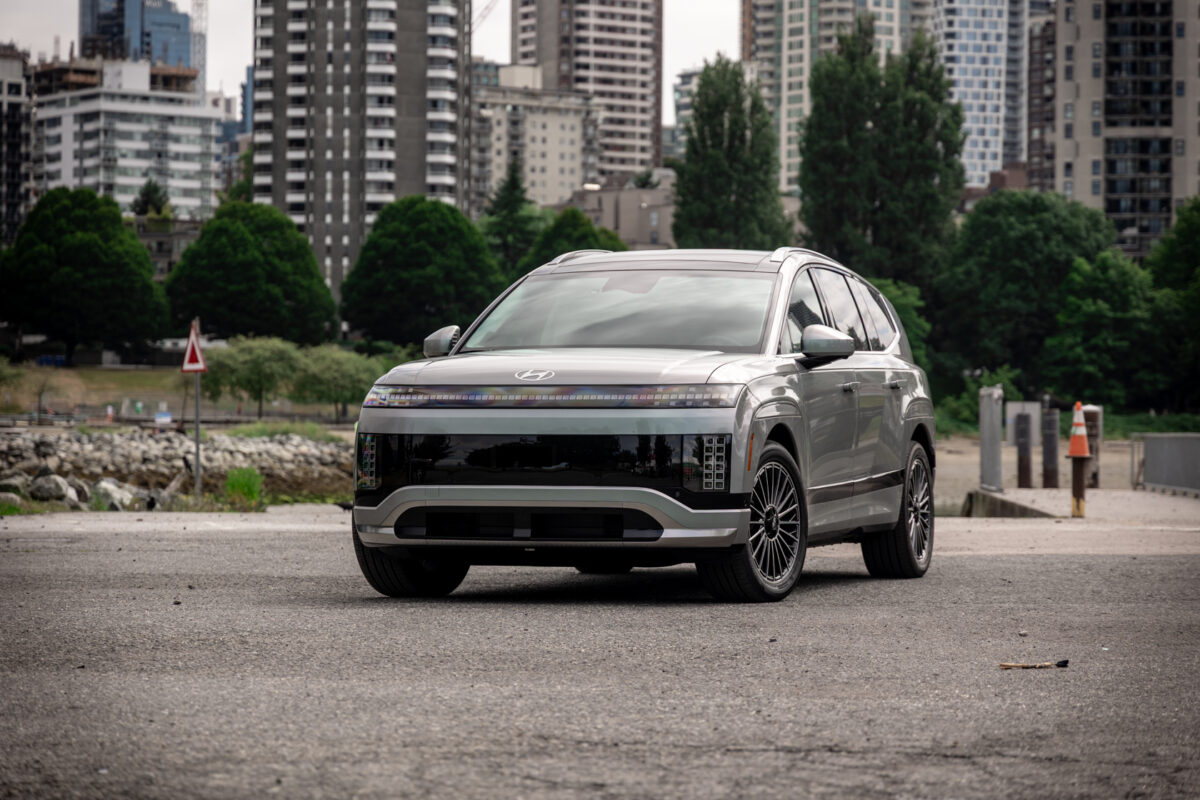
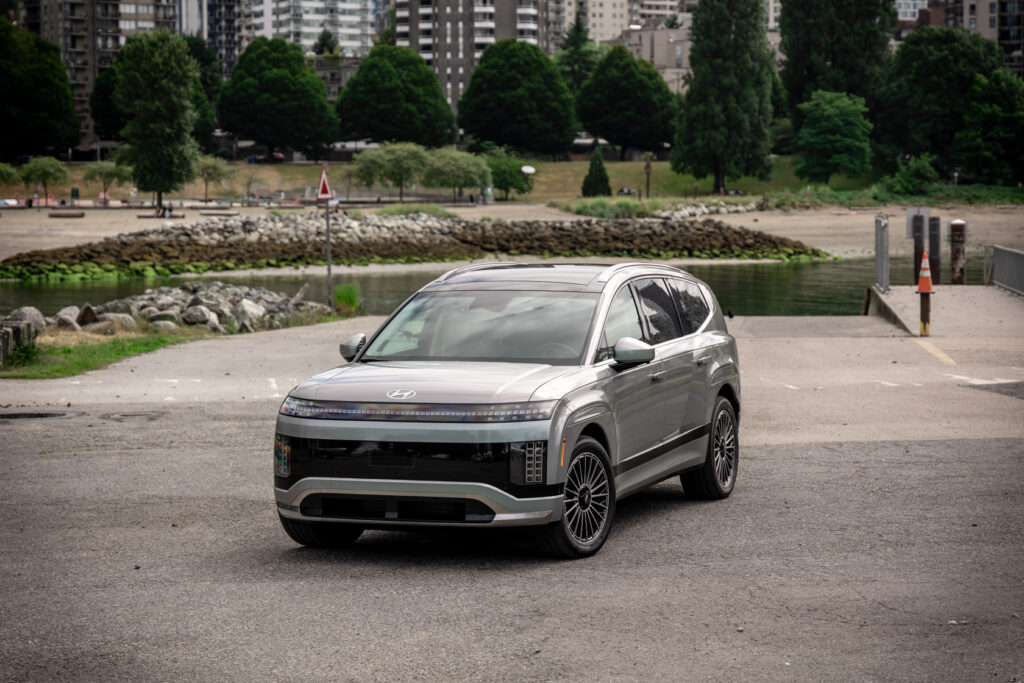
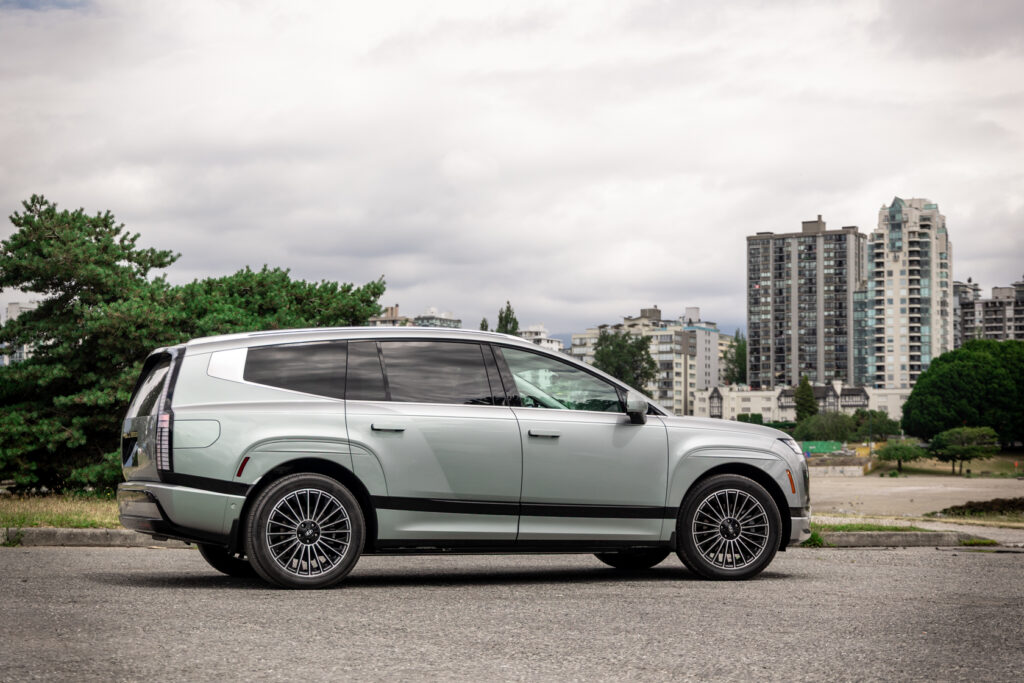
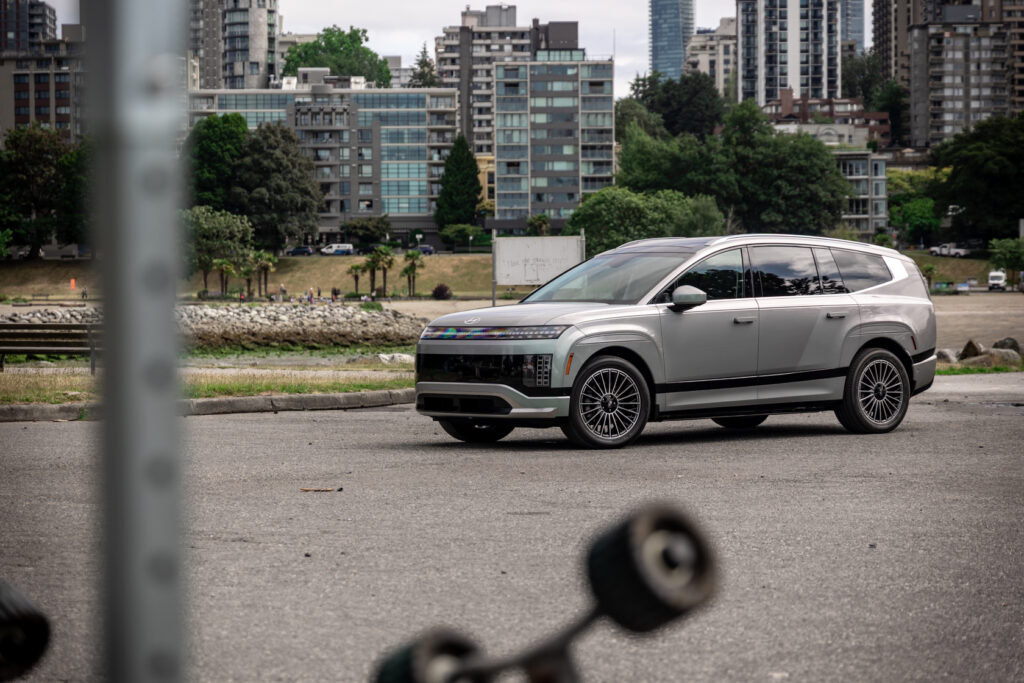
The all-new IONIQ 9 joins Hyundai’s award-winning EV lineup. It is a large 3-row electric SUV with an eye-catching exterior and a spacious 6 or 7 passenger interior. 

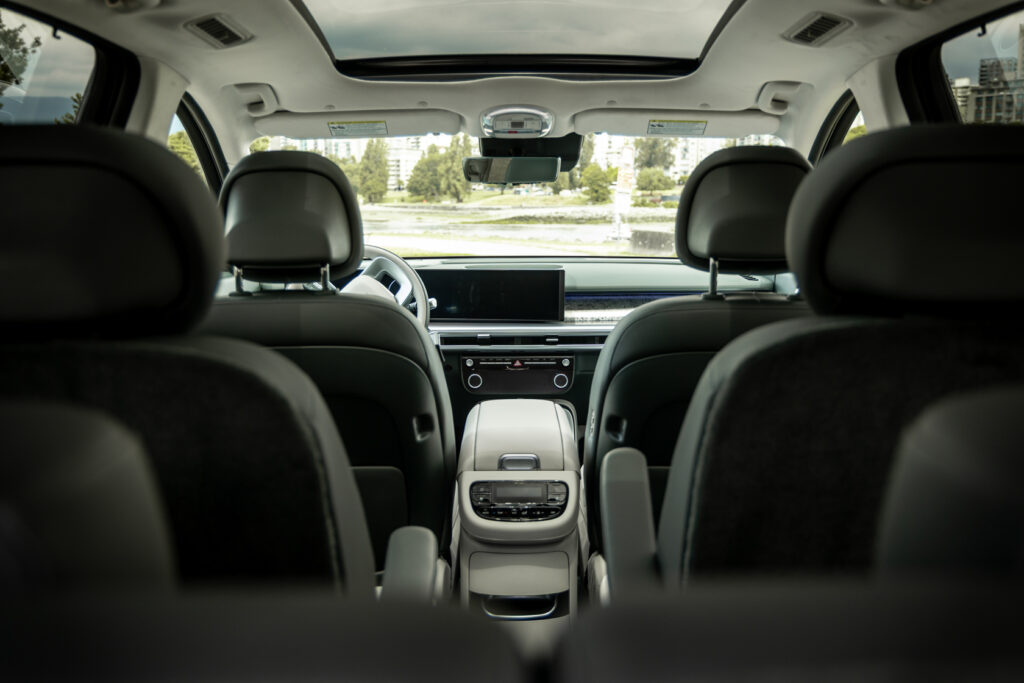
The IONIQ 9’s lounge-like atmosphere is created through elliptical elements and calming tones, while natural light streams through the panoramic sunroof. Passengers can experience exceptional roominess with ample second- and third-row space. 

The flat floor accommodates flexible seating arrangements for six or seven occupants, while Relaxation Seats in the first and second rows offer full recline capability with leg rests — perfect for relaxing while recharging. 

Speaking of charging, the IONIQ 9 has a 110.3 kWh battery pack in the floor with an 800-Volt architecture. The higher Voltage enables the IONIQ 9’s battery to be recharged at a faster rate for a longer period of time without needing to worry about excessive heat build-up in the battery pack. With charging speeds of up to 350 kW, the IONIQ 9 can be recharged in as little as 24 minutes from 10% to 80%.  

Additionally, the IONIQ 9 adopts the NACS charging plug. This is more commonly known as a Tesla charging plug which will enable the SUV to be charged up from any one of the thousands of Tesla Superchargers across Canada and the United States. 

Once the SUV is charged up, it can be driven for over 500 km. Best of all, the 500+ km driving range is for all trim levels. This is achieved through its sleek exterior design which has an overall drag coefficient of 0.269. To put it into perspective, that is the same drag coefficient as the much smaller Toyota Prius. 

It’s not just about efficiency though, the Hyundai IONIQ 9 is a powerful 3-row SUV as well. The dual-motor AWD+ variant produces as much as 422 hp and has a 0-100 km/h time of just 5 seconds. Regular AWD models produce 303 hp while the RWD version produces 215 hp. In addition, the Hyundai IONIQ 9 can tow up to 5,000 lbs. 

The IONIQ 9 delivers a luxurious and refined driving experience thanks to its smooth and comfortable ride. Its suspension has been specially designed for this electric SUV, featuring a MacPherson strut front and multi-link rear setup along with self-leveling dampers. 

Inside, IONIQ 9’s cabin is a haven of tranquility, thanks to the triple door seals, acoustic glass, sound-absorbing tires and Active Noise Control technology. These features effectively suppress wind and road noise, particularly at highway speeds. 

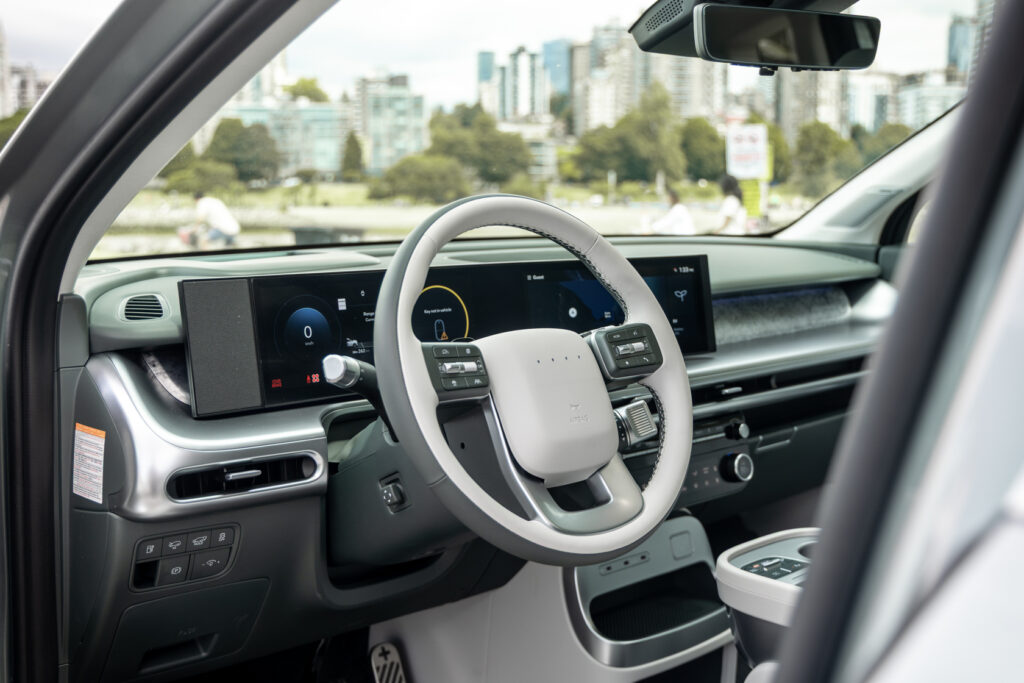
Sticking with the interior, the IONIQ 9’s cabin design is reminiscent of the IONIQ 5’s with a simple dual-screen layout. Both the driver instrumentation and infotainment touchscreen measure 12.3” diagonally. Climate controls, USB ports, and small item storage bins are conveniently located right underneath the infotainment touchscreen. For a bit of extra space, the center console can slide forwards or backwards for easier access by the 2nd row occupants and to allow a passthrough in between the front seats. 

The 3-row SUV incorporates a route planner which will display charging stations along your planned trip and estimate the battery state of charge when you reach a charging station and your destination. The Hyundai IONIQ 9 can also power external electronics such as a small coffee machine with its V2L technology. This can make family camping a much more luxurious experience. 

The 2026 Hyundai IONIQ 9 starts at $59,999 with the top spec Ultimate Calligraphy trim costing $81,499 and this new EV is available right now at OpenRoad Hyundai Richmond.


The BMW M5 is a 717 hp Eco-Friendly Sedan

The BMW M5 was one of the first high performance sedans on the market. It was once the fastest sedan in the world. It once had a performance oriented V10 engine under the hood. And now, the BMW M5 is going green. 

Yes, the all-new BMW M5 can be considered a green, environmentally friendly vehicle. It’s a plug-in hybrid with up to 43 km of electric-only driving range. This means that you can take the kids to school and drive yourself to work without using a single drop of fuel. 

The 14.8 kWh usable battery pack can be recharged in about 2 hours from a level 2 charger. So on your way back home from work, you can still drive the M5 just on electricity. And you would be getting home quick because the electric motor produces 194 hp and it enables the M5 to reach 140 km/h in the electric-only drive mode. 

But what if you decide to take the long way home? The road that few travel?  

On this type of road, the BMW M5 is a completely different animal. In its sportiest setting, the new BMW M5 delivers 717 hp from a TwinPower Turbo V8 engine. Coupled with the electric motor, an 8-speed automatic transmission and M xDrive, the BMW M5 can accelerate from a stop to 100 km/h in 3.5 seconds and on to a top speed of up to 305 km/h.  

Those numbers are impressive, especially since this is the heaviest M5 to date. The battery pack does add some of that weight, but it needed to be a plug-in hybrid in order to meet & exceed strict government emission regulations.  

Furthermore, the battery pack is in the floor which helps keep the center of gravity closer to the ground. This in turn makes the car feel stable through corners. Add to that the surefootedness of M xDrive and the BMW M5 feels like it’s on rails. This car hides its hefty weight very well. 

But if you want, you can make the car feel a bit more like a wild animal. Like the M5 before it, the M xDrive system allows you to send 100% of the power to the rear wheels. Of course, drive responsibly when you switch it to the 2WD mode. 

The new M5 is physically a big car but it doesn’t quite feel that big from behind the steering wheel. Helping with maneuverability is the rear wheel steering system. This enables the back wheels to turn in the opposite direction of the front ones, by up to 1.5 degrees, to reduce the turning circle of the car. On highways, they turn in the same direction as the front wheels to provide a feeling of surefootedness and stability. 

The interior of the new M5 is up to date and thoroughly modern. It has a head-up display with augmented reality navigation, a single piece of glass housing two displays (one for the driver instrumentation and one for the infotainment system), and it has one of the most advanced ambient lighting systems of any new car on sale. 

But the technology doesn’t end there. The new BMW M5 has a wide array of driver aids such as the hands-free Driving Assistant Professional which will keep the car centered in your lane, change lanes in need be, and adapt the car’s speed to the flow of traffic.  

The car can also park itself with the Parking Assistant Professional. Once the system detects a parking spot and performs the maneuver once, it will remember the maneuver and perform it subsequent times without any driver intervention.  

Thanks to its larger size, the new M5 has more cargo capacity than the previous generation. There’s 467 L of space in the trunk with more available if you fold down the rear seats.  

But should you want more, the BMW M5 Touring is coming to Canada. The M5 Touring provides 500 L of cargo space behind the back seats and up to 1,630 L with the 40/20/40 rear seats folded down. This car is arguably a bit more stylish than the M5 sedan. But beauty is in the eye of the beholder. We’re just happy that the M5 wagon is finally available in Canada. 

What will the new BMW M5 cost you? It’ll start from $135,000 with quite a few customization options available. But what we want to know is, which one would you choose? The sedan or the wagon? Let us know in the comments. 

And should you need help in customizing your very own BMW M5, our knowledgeable product specialists at The BMW Store Vancouver or BMW Langley are more than happy to help out.


The 2025 Acura ADX Brigs Luxury at an Affordable Price

What is the Acura ADX? In short, it’s a new entry point into the Acura brand for a smidge under $45,000. It’s based on the Honda HR-V but don’t think of this as a fancy HR-V. Acura’s engineers made a lot of changes to make sure that this is an Acura product.  

The most noticeable change is the styling. The ADX follows the same design language of its bigger brothers. It has the diamond pentagon grille, the chicane LED daytime running lights and taillights, and optional sporty looking 19” alloys wheels.  

The interior styling doesn’t have quite the same design as the larger RDX or MDX, but it is very simple to use. The contoured steering wheel fits nicely into your hands, there are physical climate control switches, a standard 10.2” digital driver display, and a 9” touchscreen. There’s no trackpad in this car. 

The cabin features premium materials such as ultrasuede upholstery, contrasting red stitching and a leather wrapped steering wheel. It can also be equipped like a premium vehicle.  

It comes standard with heated front seats, a heated steering wheel, dual-zone automatic climate control, panoramic sunroof, and a wireless phone charging pad.  

However, if you opt for the Platinum Elite A-spec trim, it’ll come equipped with ventilated front seats, a Bang & Olufsen sound system with 15 speakers, surround view cameras, and a 12-way power adjustable driver’s seat.  

The infotainment system also gets an upgrade on the Platinum Elite A-spec trim with Google built-in and Amazon Alexa built-in. But you don’t need to move up to the top trim in order to have wireless Apple CarPlay and wireless Android Auto along with Wi-Fi hotspot capability. 

The Acura ADX is also a spacious subcompact luxury crossover. Of course, front occupants have the most room, but space back here is not too bad. There’s also a lot of space in the trunk with almost 700 L behind these rear seats.  

On the move, the Acura ADX gets its power from a 1.5L turbocharged 4-cylinder engine. This is similar to the one that is used in the Acura Integra. It produces 190 hp and 179 lb-ft of torque with the power being distributed to all four wheels via a standard AWD system and a continuously variably transmission. 

This engine doesn’t make the ADX as quick as Acura’s larger SUVs, but it does feel peppy. It doesn’t struggle to get off the line nor to merge onto a highway.  

It’s also quite economical for a turbo engine with AWD. It’s rated for 9.1 L/100km in a city and 7.7 L/100km on a highway.  

The AWD system is unfortunately not Acura’s super handling AWD system like the one found in the RDX or MDX. It cannot send more of the engine’s torque to the outside rear wheel while cornering for better driving dynamics. Instead, up to 50% of the engine’s torque can be sent to both back wheels and Acura’s integrated dynamics system allows you to choose from four different drive modes with the Platinum Elite A-spec providing an individual drive mode that can be customized to your liking. 

As mentioned at the start of the review, the new Acura ADX will start at just under $45,000 with a fully loaded Platinum Elite A-Spec at $51,480.  

Should you want to learn more about the ADX or test drive it for yourself, our knowledgeable product specialists at OpenRoad Acura Richmond are more than happy to help you out.